

How to evaluate a rhinoplasty surgeon in Brazil.
No ranking can tell you who is right for your nose. What you can do is check credentials, technical range, consultation quality and hospital standards, item by item, before you commit.
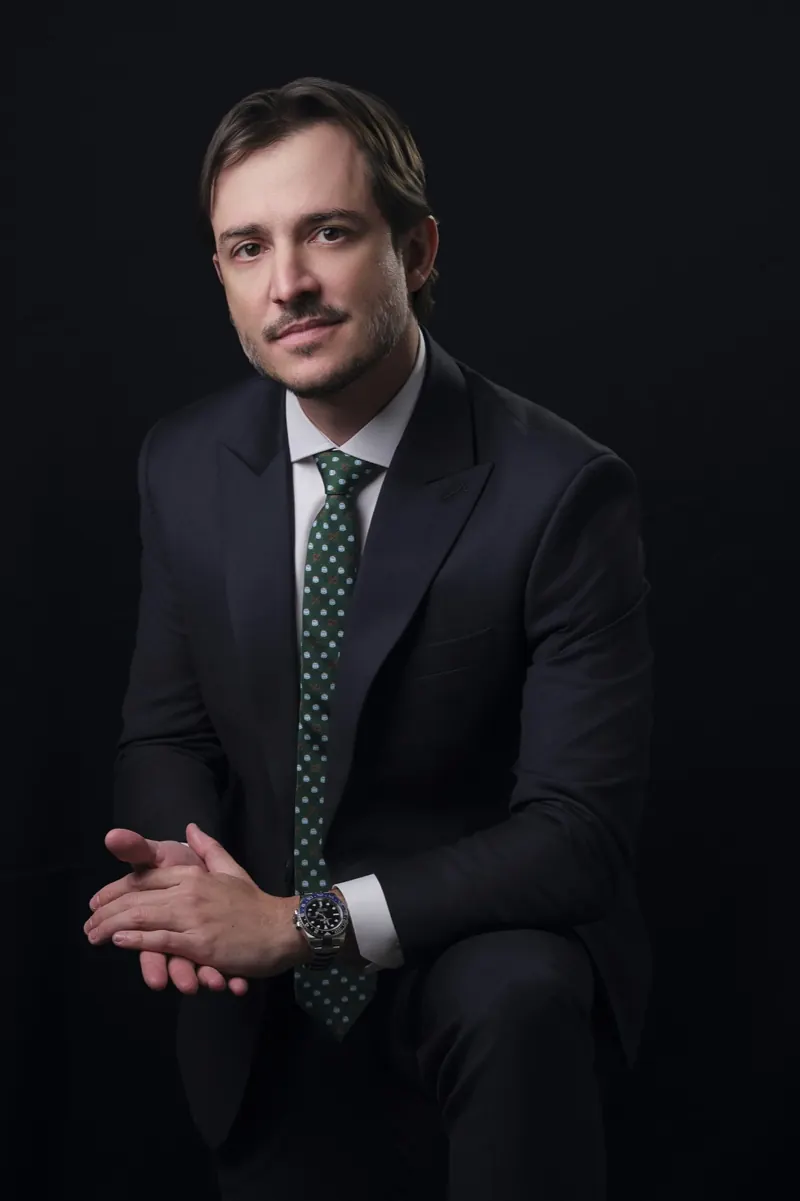
There is no official ranking of rhinoplasty surgeons in Brazil. What exists are verifiable criteria: an active CRM registration, an RQE confirming a recognized specialty title, documented rhinoplasty training, peer-reviewed publications, a technical range that matches your nose, a full consultation with internal nasal examination and standardized photographs, an accredited hospital with intensive care, and a written follow-up schedule. Dr. Guilherme Sella holds CRM-PR 33.018 and RQE 17.984, completed a direct doctorate at HCFMRP-USP, and has six PubMed-indexed papers. Check each item yourself, in public databases, before you book anything.
Why rankings and follower counts do not answer your question
Brazil has no official list that ranks nose surgeons. No medical board publishes one, and Brazilian advertising rules for physicians forbid surgeons from claiming superiority, from promising results and from publishing patient testimonials. So any site that presents a ranking is either selling placement or reproducing marketing copy.
Social media is equally unreliable as a measure. Follower counts reflect content production, not surgical judgment. Before and after photographs shared online are selected by the surgeon, rarely standardized, often taken at different distances and lighting, and almost never show the twelve-month result that actually matters.
What you can evaluate is more boring and far more useful: documents, training, publications, technical range, how the consultation is conducted and where the surgery happens. All of it is checkable from your own country.
The credential check you can do in ten minutes
In Brazil, every physician has a CRM, a registration number issued by the state medical council. A surgeon who holds a recognized specialty title also has an RQE, the registry of specialist qualification, linked to that title. Both are public.
Steps:
- Ask for the full name, CRM number and state.
- Search the number on the Conselho Federal de Medicina public portal and confirm the registration is active and free of disciplinary restriction.
- Confirm the RQE and which specialty it refers to. Rhinoplasty in Brazil is legally performed by otolaryngologists and by plastic surgeons.
- Search the surname on PubMed to see whether the surgeon has published and on what topics.
- Check whether the surgeon belongs to a titular society such as ABORL-CCF or the Academia Brasileira de Cirurgia Plástica da Face.
For reference, Dr. Guilherme Sella holds CRM-PR 33.018 and RQE 17.984, with the otolaryngology specialist title awarded by ABORL-CCF in 2014. Residency at Hospital das Clínicas da Faculdade de Medicina de Ribeirão Preto, University of São Paulo. Direct doctorate in morphophysiology of facial structures at the same institution, completed in 2018. Fellowship in structural rhinoplasty in Melbourne and Sydney. Titular member of ABORL-CCF and of the ABCPF, where he currently serves as deputy treasurer, and founding member of the Sociedade Brasileira de Rinoplastia.
Does the surgeon do enough rhinoplasty, and which kinds?
Volume alone is a weak criterion, but a surgeon whose practice is concentrated in the nose and face will have seen more variations of your anatomy. More informative is technical range. A nose that needs dorsal reduction without losing the natural dorsal lines is a different problem from a thick-skinned nose with a weak tip, and both differ from a revision after cartilage has already been removed.
Questions worth asking:
- Do you perform dorsal preservation, push down and let down, and in which cases do you avoid it?
- Do you use ultrasonic instruments for bone work, and why?
- Can you harvest septal, ear and rib cartilage when structural support is needed?
- Do you treat the functional side of the nose, septum, turbinates and nasal valves, in the same procedure?
- How many of your cases are revisions, and how do you plan them?
A surgeon who offers a single technique for every nose is, in practice, fitting the patient to the method. The Dr. Sella practice covers preservation, ultrasonic, structural and revision rhinoplasty, with more than 1,500 rhinoplasties performed, a number informed by the surgeon himself.
Published work is a check on reasoning, not on skill
Publication does not make a surgeon's hands better. It does show that the reasoning was submitted to peer review. Six papers are indexed on PubMed under Sella GCP, including "Expanding Indications to Dorsal Preservation Rhinoplasty" in Facial Plastic Surgery Clinics of North America, 2025, "Brazilian Approach to Dorsum Preservation" in the same journal in 2023, and "Indications for Preservation Rhinoplasty: Avoiding Complications" in Facial Plastic Surgery, 2021. ORCID 0000-0001-9761-695X.
Teaching is a related signal. Invited lectures in more than ten countries, including two presentations at the All in One Rhinoplasty Congress in Istanbul in 2025, and a structured fellowship and course program for other surgeons, mean the technique is exposed to colleagues who ask hard questions.
Use the consultation to evaluate the surgeon
The first appointment is your best diagnostic tool. A consultation that lasts fifteen minutes and ends with a price is not an assessment.
An adequate rhinoplasty consultation lasts around an hour and includes history, external and internal nasal examination, standardized photographs, digital simulation, an explanation of the proposed technique and a written postoperative timeline. High-frequency dermatologic ultrasound is useful in selected cases to measure skin thickness, detect previous fillers or grafts, map columellar vascularization and help choose a rib graft.
Two honesty markers to listen for. First, the simulation should be presented as an approximation, in the range of 60 to 70 percent similarity to the final result, not as a preview. Second, the surgeon should state the revision rate reported in the literature, roughly 5 to 15 percent, and explain that a revision is only considered after twelve months.
Green flags and doubts
| Criterion | How to verify | What raises doubt |
|---|---|---|
| Registration | Active CRM and RQE on the CFM portal | Number not provided or inactive |
| Training | Residency and fellowship with named institutions | Vague courses, no institution cited |
| Scientific output | PubMed, ORCID, congress programs | Awards and rankings with no source |
| Technique | Named techniques, with indications and limits | One technique for every nose |
| Consultation | One hour, internal exam, photographs, simulation | Quote by message, no examination |
| Facility | Accredited hospital, anesthesiologist, ICU | Surgery in an unequipped office |
| Follow-up | Scheduled returns at 1, 3, 6 and 12 months | Follow-up undefined |
| Communication | Risks explained in writing | Promised result, no mention of risk |
Where the operation happens
Rhinoplasty with Dr. Sella is performed under general anesthesia, or sedation in selected cases, and takes three to five hours, longer in revisions. Patients stay 12 to 24 hours at Saine Health Complex in Maringá, a boutique hospital with 7,500 square meters, 11 operating rooms, adult and neonatal intensive care, intensivists on site 24 hours and hyperbaric medicine. Smaller procedures under local anesthesia may be done at the clinic.
Ask any surgeon abroad the same questions: which hospital, who gives the anesthesia, is there an ICU, and who sees you if something happens at 3 a.m.
Logistics are part of the decision
For patients traveling from other countries or other Brazilian states, the practical plan matters as much as the technique. The usual sequence is an initial teleconsultation, preoperative tests done at home, arrival one or two days before surgery, about seven days in Maringá until the external cast is removed, then flying home. Returns at 1, 3, 6 and 12 months can be in person or online. A companion is recommended for the first week. Maringá airport has direct flights from São Paulo and Curitiba. Details are in the page for international patients.
Care is private only, with no insurance contracts. The clinic issues documentation so you can request reimbursement from your plan, including the functional portion of the surgery. A surgical estimate is given after the consultation, since it depends on technique, operating time and grafts.
When to consult Dr. Sella
Consider booking an assessment if you want a nose that fits your face without losing identity, if you also have breathing complaints, or if you have already had surgery and are considering revision. Indication, risks and the surgical plan are individual and defined in consultation, after examination and imaging. You can see the overview of rhinoplasty or contact the team to ask about the next available dates.
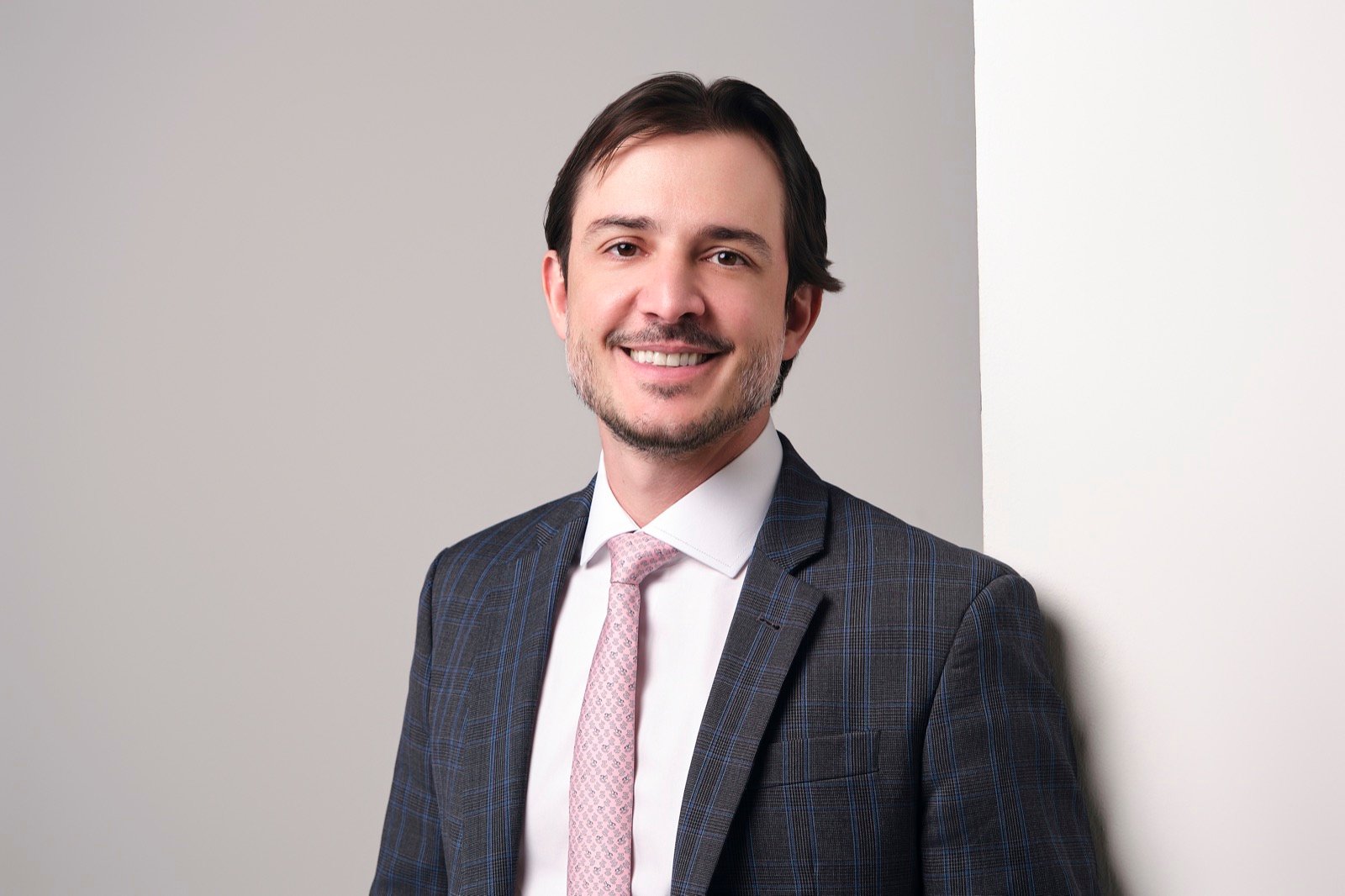
Otolaryngologist and facial plastic surgeon · CRM-PR 33.018 · RQE 17.984. PhD from FMRP-USP, founder of the Sella Learning Center. Updated on 2026-10-07.
Frequently asked questions
Is there an official ranking of rhinoplasty surgeons in Brazil?
No. No medical council or specialty society publishes rankings, and Brazilian advertising rules prohibit physicians from claiming superiority over colleagues. Lists you find online are marketing, not evaluation.
How do I check a Brazilian surgeon's credentials from abroad?
Ask for the full name and CRM number with the state, then search it on the Conselho Federal de Medicina public portal. Confirm that the registration is active and that there is an RQE for a specialty that includes rhinoplasty, such as otolaryngology or plastic surgery.
Which specialties can legally perform rhinoplasty in Brazil?
Otolaryngologists and plastic surgeons with a recognized specialty title. Dr. Sella is an otolaryngologist with RQE 17.984, which also covers the functional part of the nose such as septum, turbinates and nasal valves.
Should I choose a surgeon based on before and after photos?
Photos are useful only when standardized and taken at comparable intervals, ideally at twelve months. Treat them as one piece of information among credentials, technical range, consultation quality and hospital standards.
How long should a rhinoplasty consultation take?
Around an hour. It should include history, internal nasal examination, standardized photographs, digital simulation, explanation of the proposed technique and a postoperative timeline, with nasal ultrasound when indicated.
What revision rate should a surgeon be willing to discuss?
The rhinoplasty literature reports revision rates in the range of 5 to 15 percent, and a revision is generally considered only after twelve months. A surgeon who avoids the subject is worth questioning further.
Book a consultation with Dr. Guilherme Sella
In person in Maringá, Brazil, or by video consultation. English-speaking team.