

Choosing a rhinoplasty destination, criterion by criterion.
No country performs your surgery. A specific surgeon, in a specific hospital, with a specific follow-up plan does. Here is how to compare destinations using criteria instead of marketing.
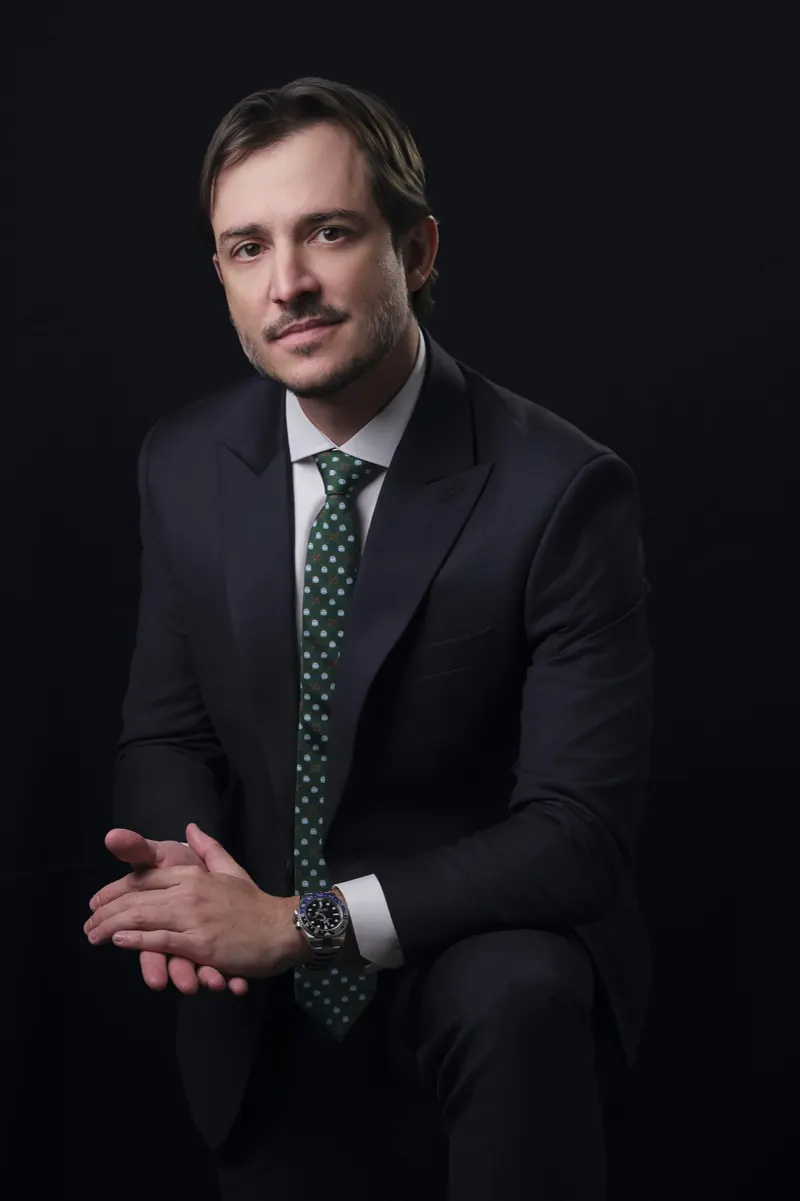
There is no ranking that answers Brazil vs Turkey rhinoplasty, because the variable that matters is the surgeon and the system around them, not the flag. Compare six things in every country: verifiable specialist credentials, the regulator you can check them with, where the surgery happens and who gives anesthesia, the follow-up schedule for the first 12 months, the language of your consultation and consent, and the written revision policy. Dr. Guilherme Sella, who operates in Maringá, Brazil, applies the same checklist when international patients ask him to compare options abroad.
Why "which country is best" is the wrong question
Patients searching for rhinoplasty abroad usually start by comparing countries. Brazil, Turkey and Mexico all appear because all three have high surgical volume, experienced surgeons and established medical tourism structures. All three also have surgeons you should avoid.
Country-level averages tell you almost nothing about the person who will hold the instrument over your nose. Volume statistics, such as the international surveys published by ISAPS, describe markets. They do not describe your case, your skin thickness, your breathing or your revision risk.
A better approach is to apply one identical checklist to every candidate, wherever they practice. If a surgeon in any country fails the checklist, the country stops being relevant.
Criterion 1: the surgeon's credentials, and how you verify them
Start with training, then with proof.
Ask what the surgeon's base specialty is. Rhinoplasty is performed by otolaryngologists and by plastic surgeons, and both routes are legitimate. What matters is documented specialty training, dedicated rhinoplasty training beyond residency, and continued academic activity.
Then ask how you can confirm it yourself. In Brazil, medicine is regulated by the Conselho Federal de Medicina. Each doctor has a CRM number and, when they hold a recognized specialty title, an RQE registered to that specialty. Both are searchable on the state medical council website by anyone, from anywhere. Turkey, Mexico, the United States and European countries each have equivalent registries and board certifications. The question is identical everywhere: show me the registry, and show me your number in it.
Useful signals of depth, not of superiority:
- Peer-reviewed publications indexed in PubMed, which you can search by the surgeon's name
- Teaching activity, fellowship programs and invited lectures at congresses
- Membership in national specialty societies
- Surgical volume in the specific operation you want, including secondary cases
For reference, you can see how this looks in practice on the page about Dr. Guilherme Sella, including the PhD at HCFMRP-USP, the EBFPRS certification and publications on dorsal preservation.
Criterion 2: where the operation happens and who gives the anesthesia
This is the criterion most often hidden in package marketing.
Ask directly:
- Is the surgery performed in a licensed hospital or in an office-based facility?
- Is there an intensive care unit in the same building, with intensivists available around the clock?
- Who administers anesthesia, and is that person an anesthesiologist with a specialty title?
- How many hours of inpatient observation are planned after surgery?
Rhinoplasty under general anesthesia typically takes three to five hours, and revision cases take longer. That is real surgery, and the structure around it should match. In Maringá, Dr. Sella operates at a hospital with eleven operating rooms, adult and neonatal ICU and 24-hour intensivists, with 12 to 24 hours of inpatient stay. You should ask for the equivalent description, in writing, in any country you are considering.
A package that names the hotel but not the hospital is answering the wrong question.
Criterion 3: the follow-up plan for the next 12 months
A nose does not finish healing when you board the plane home. Swelling resolves gradually, and the definitive result appears between 6 and 12 months, sometimes up to 18 months in thick skin or in revision cases.
So ask what happens after the dressing comes off:
- Who reviews your photographs at 1, 3, 6 and 12 months?
- Are online follow-ups included, and in which language?
- Who do you contact at 2 a.m. in week one, and how fast do they answer?
- If a minor issue appears at month four, is there a protocol, or does the relationship end at discharge?
A structured international pathway looks like this: teleconsultation first, tests done in your home city, arrival one or two days before surgery, about seven days in the city until the external splint is removed, then remote reviews with in-person visits when you can travel. That is the model described on the international patients page.
Criterion 4: language, consent and documentation
Surgical decisions are made in conversation. If the consultation happens through a non-medical interpreter supplied by an agency, nuance is lost, and nuance is where rhinoplasty lives.
Check whether the surgeon personally speaks a language you speak. Check who signs your informed consent and whether you receive a copy you can read. Check whether you will receive an operative report, a list of grafts used and any imaging, in a language your doctor at home understands. Dr. Sella consults in Portuguese, English and Spanish, and the team issues documentation in English and Spanish on request, which also helps patients who will file for insurance reimbursement for the functional part of the procedure.
Criterion 5: the revision policy, agreed before surgery
Revision rates reported in the rhinoplasty literature generally fall between 5 and 15 percent, and revisions are usually considered only after 12 months of healing. Any surgeon who tells you their rate is zero is telling you something about their record keeping.
Before you book, ask in writing:
- Under what conditions would a revision be considered?
- Which costs are covered, which are not, including hospital and anesthesia
- How long after the first surgery the policy remains valid
- Who performs the revision
If you already had surgery elsewhere and are now comparing destinations for a second operation, the criteria tighten further, because you will need previous operative reports and an assessment of available graft material. That scenario is covered on the revision rhinoplasty page.
Criterion 6: technique, and whether it is chosen for you
Technique should follow the anatomy, not the brand. Dorsal preservation, structural grafting, ultrasonic bone work and closed or open approaches are tools. A surgeon who performs only one of them will tend to find that one indication in every patient.
Ask which approach is being proposed for your nose and why, and what the alternative would be. Ask whether digital simulation is used, and how it is interpreted. A realistic answer is that simulation shows direction with roughly 60 to 70 percent similarity to the final result, never a guarantee. You can read how these tools are used in preservation rhinoplasty and ultrasonic rhinoplasty.
A checklist you can apply to any country
| Criterion | What to ask | Warning sign |
|---|---|---|
| Credentials | Specialty title and public registry number | Only social media proof |
| Who operates | Name of the surgeon who will perform every step | "The team" without names |
| Facility | Hospital license, ICU, inpatient hours | Facility not named before booking |
| Anesthesia | Specialist anesthesiologist, present throughout | Vague or unanswered |
| Consultation | Direct conversation in a shared language, internal nasal exam | Diagnosis by photo only |
| Follow-up | Written schedule to 12 months, remote and in person | Contact ends at discharge |
| Revision | Written policy with conditions and costs | Verbal promise of "free revision" |
| Documentation | Operative report and graft list in your language | Nothing provided |
Practical travel factors, in order of real importance
Flight time matters less than most people think. Recovery time in the destination matters more. Plan around a week in the city before flying home, with clearance to fly usually given after the external dressing is removed, and a companion during the first week.
The rest is logistics. Maringá is served by MGF airport with direct flights from São Paulo and Curitiba, and the clinic is on Av. Cidade de Leiria in Zona 01. Brazil has a long surgical tradition in facial surgery, and costs for international patients are often lower than in the United States and Europe because of exchange rates and local fee structures. None of that substitutes for the checklist above. Price is a consequence of the system you chose, never a criterion by itself.
The comparison you should make is between three named surgeons and their structures, not between three countries.
When to see Dr. Sella
If you are weighing destinations and want a clinical opinion rather than a sales pitch, an initial teleconsultation is the practical first step. It covers your anatomy, your breathing, what a given technique can and cannot change, and what your follow-up would look like from where you live. Indication, risks and plan are individual and defined in consultation. You can review the full process on the rhinoplasty page or reach the team through contact.

Otolaryngologist and facial plastic surgeon · CRM-PR 33.018 · RQE 17.984. PhD from FMRP-USP, founder of the Sella Learning Center. Updated on 2026-10-15.
Frequently asked questions
Is rhinoplasty in Brazil better than in Turkey or Mexico?
No country is inherently better. Outcomes depend on the individual surgeon, the facility, the anesthesia team and the follow-up structure, so the comparison should be made between named surgeons rather than between countries.
How do I verify a Brazilian surgeon's credentials from abroad?
Brazilian doctors have a CRM number and, when they hold a recognized specialty title, an RQE registered to that specialty. Both can be checked for free on the state medical council website from any country.
How long do I need to stay in Brazil after rhinoplasty?
Most international patients arrive one or two days before surgery and stay about seven days in total, until the external splint is removed. Flying home is usually cleared after that, with follow-ups at 1, 3, 6 and 12 months in person or online.
What should a revision policy include?
It should state in writing the conditions under which a revision would be considered, which costs are covered, how long the policy is valid and who performs the operation. Revisions are generally evaluated only after 12 months of healing.
Can I have the consultation in English or Spanish?
Yes. Dr. Sella consults in Portuguese, English and Spanish, and the team can issue surgical documentation in English and Spanish on request.
Does the hospital really matter for a rhinoplasty?
Yes. Rhinoplasty usually takes three to five hours under general anesthesia, so the presence of a licensed hospital, a specialist anesthesiologist and intensive care support is part of the safety profile of the procedure.
What questions should I ask about anesthesia before booking surgery abroad?
Ask who administers the anesthesia, whether that person is a board-certified anesthesiologist, and whether they stay in the room for the whole procedure. Ask also what monitoring is used and whether the facility has an intensive care unit and intensivists available if something unexpected happens. In Maringa, Dr. Sella performs rhinoplasty under general anesthesia, or sedation in selected cases, with an overnight stay in a licensed hospital. If a clinic cannot answer these questions clearly in writing, treat that as information in itself.
Is a cheap all-inclusive rhinoplasty package a red flag?
A package is not automatically a problem, but you should ask what it includes and what it excludes. Find out whether the surgeon you spoke to is the one who will operate, how long the operation is scheduled for, where you will sleep after surgery, and who sees you at each follow-up. Packages that cannot name the surgeon, the hospital or the follow-up schedule are selling logistics rather than surgery.
How many follow-up appointments should I expect in the first year?
Rhinoplasty results evolve for six to twelve months, and up to eighteen months in thick skin or revision cases, so a single post-operative check is not enough. A reasonable schedule includes a visit around one month, three months, six months and twelve months, in person or online for patients who live far away. Before you book anything abroad, ask the team to write down who you will see at each of those points and how you reach them between visits.
What is the difference between a surgeon's total case volume and experience in my specific case?
Total numbers describe a career, not your nose. A surgeon who does mostly primary cosmetic cases may have limited experience with revision surgery, rib grafts or significant breathing problems, and the reverse is also true. Ask how many operations similar to yours the surgeon performs in a typical month and what techniques they would consider for your anatomy. That conversation only becomes concrete during a consultation with photographs and an internal examination of the nose.
Book a consultation with Dr. Guilherme Sella
In person in Maringá, Brazil, or by video consultation. English-speaking team.