

Chairing an international rhinoplasty congress.
A three-day international meeting in Maringá, Brazil, built around rhinoplasty and facial surgery. Here is what chairing it involves, who the faculty are, and how that week affects consultations and surgical scheduling.
Dr. Guilherme Sella is the chair of the Maringá RhinoFace Summit 2026, an international rhinoplasty and facial surgery congress held in Maringá, Brazil, from November 12 to 14, 2026. Chairing means he defines the scientific program, invites the faculty and hosts the meeting. The confirmed faculty includes 21 speakers from 8 countries. The event is open to physicians only, with a medical license number required at registration. For patients, it indicates a surgeon whose technique is presented and discussed openly among peers. Indication, technique and risks are always decided individually in consultation.
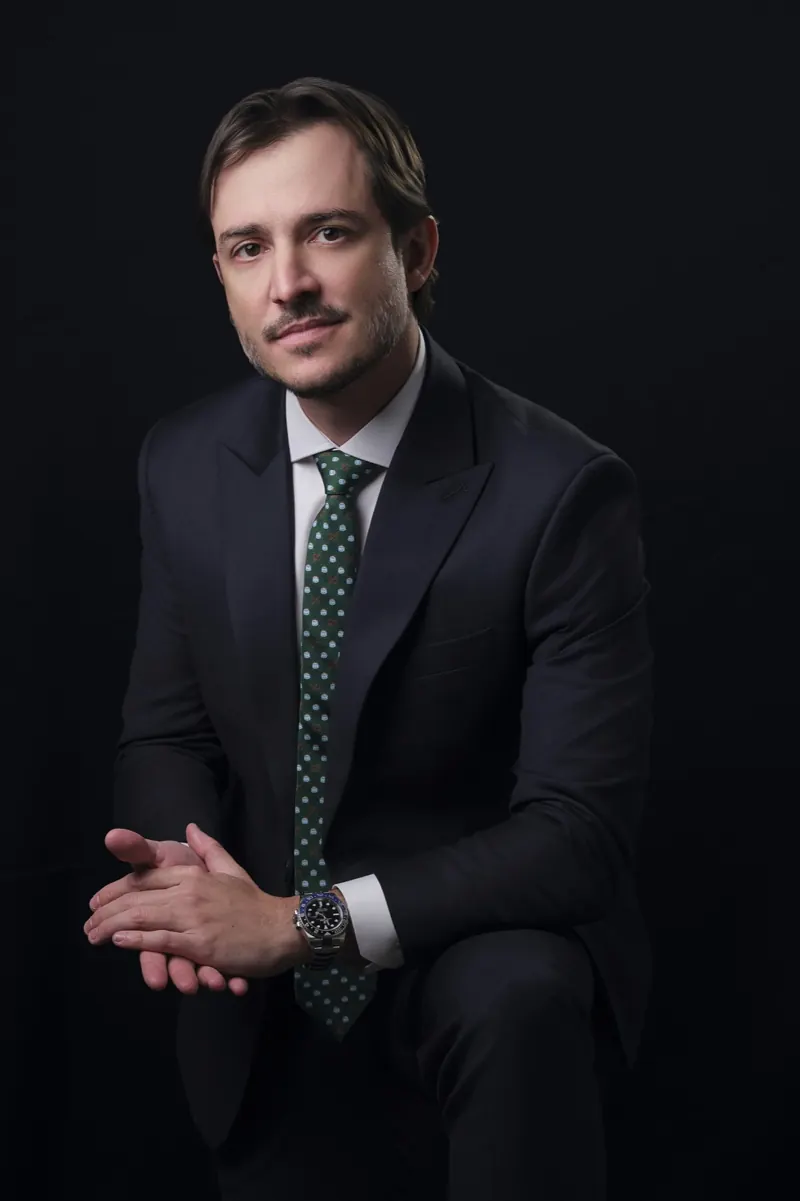
What does it mean to chair a surgical congress?
A congress chair is the physician responsible for the scientific content of the meeting. That involves choosing the themes, inviting the faculty, organizing live surgery and anatomy sessions, and moderating discussion between surgeons who often disagree about technique.
It is an organizational role before it is a clinical one. What it tells a patient is narrow and still useful: the surgeon's daily practice is exposed to colleagues from other countries, filmed, questioned and debated. Surgery done in front of peers is surgery that has to withstand scrutiny.
It does not tell you anything about your own nose, your anatomy or your likely result. Those are defined in consultation, after examination and photographs.
Maringá RhinoFace Summit 2026 at a glance
| Item | Detail |
|---|---|
| Dates | November 12 to 14, 2026 |
| Duration | 3 days |
| City | Maringá, Paraná, Brazil |
| Chair | Dr. Guilherme Sella |
| Faculty confirmed | 21 speakers from 8 countries |
| Countries represented | Brazil, Turkey, Mexico, Colombia, Ecuador, Peru, Bolivia, Argentina |
| Audience | Physicians only, medical license required at registration |
| Format | Lectures, live surgery sessions, anatomy |
| Official site | rhinofacemaringa.com |
Full details are on the event page.
A faculty from eight countries, and why that matters
Rhinoplasty is not practiced identically around the world. Dorsal preservation has strong roots in Latin America and Europe. Structural grafting developed along different lines in the United States and Turkey. Skin thickness, cartilage quality and aesthetic expectations vary between populations, and so do the techniques that work well.
Bringing surgeons from Turkey, Mexico, Colombia, Ecuador, Peru, Bolivia, Argentina and Brazil into the same room for three days forces those approaches to be compared directly. For a patient, the practical consequence is simple. A surgeon exposed to several schools has more than one way to solve a problem, and is less likely to apply a single technique to every nose.
The program is organized around these axes:
- Structural and preservation rhinoplasty
- Secondary and revision rhinoplasty
- Facial rejuvenation, including deep plane, hybrid techniques and endoscopic lifting
- Periorbital surgery, including upper and lower blepharoplasty and canthopexy
- Structural surgery of the midface, lower face, neck and forehead
- Live surgery and anatomy sessions
How this fits the rest of the surgeon's academic record
Chairing a congress is one item among several. The relevant background is verifiable:
- Otolaryngology residency at HCFMRP-USP, followed by a doctoral degree in morphophysiology of facial structures completed in 2018 at the same institution
- Rhinoplasty fellowship in Melbourne and Sydney, Australia, with later observerships in the United States, Portugal and Turkey
- Indexed publications on dorsal preservation, including articles in Facial Plastic Surgery Clinics of North America in 2023 and 2025 and in Facial Plastic Surgery in 2021
- Invited faculty in more than ten countries, including Turkey, the United States, Spain, Ireland, Mexico, Venezuela, Peru, Argentina, Ecuador and Azerbaijan
- Member of the ABORL-CCF and of the Brazilian Academy of Facial Plastic Surgery, where he currently serves as adjunct treasurer
- Founder of the Sella Learning Center, which runs an annual twelve-month fellowship since 2022 and the Preservation Week course, now in its sixth edition
More on training and credentials is on the surgeon's profile page, and the full teaching record is listed under lectures.
What chairing does and does not tell you
| Chairing an international meeting suggests | It does not guarantee |
|---|---|
| The surgeon's technique is presented and defended in front of peers | A specific result for your nose |
| Exposure to multiple international schools of rhinoplasty | That any single technique suits your anatomy |
| Active involvement in teaching and in surgical anatomy | Absence of risk or of the possibility of revision |
| Peer recognition within rhinoplasty societies | A shorter recovery than usual |
Revision rates in the rhinoplasty literature generally fall in the range of 5 to 15 percent, and revision is only considered after twelve months. That remains true regardless of a surgeon's academic activity, and it is discussed openly during consultation.
Does the congress affect scheduling in November 2026?
Yes, in a limited way. During November 12, 13 and 14 the clinic's routine schedule in Maringá is reduced, since the chair is at the venue for the whole meeting. The days immediately before the congress are also busier than usual, with faculty arriving and preparation for live surgery sessions.
Practical guidance for patients planning surgery around that period:
- Book consultation and surgery dates well in advance if you are targeting October or November 2026.
- Consider the weeks before or after the congress if you want a quieter schedule for follow-up visits.
- Remember that international patients usually stay around seven days after rhinoplasty, until the external cast is removed, and that flying is released after that.
- Hotels in Maringá are busier during congress week, so reserve early if you travel at that time.
Live surgery is part of the academic program of this kind of meeting. Any participation of a patient in a filmed or live case is discussed individually, well in advance, with explicit written consent and with the option to decline at any point. It is never a condition for being operated on.
Can patients attend?
No. Registration requires a valid medical license number, and the content is surgical and anatomical. Patients interested in understanding techniques in plain language will find that information on the pages about rhinoplasty, preservation rhinoplasty and revision rhinoplasty.
Physicians interested in the Summit, in the annual fellowship or in weekly mentorship should use the dedicated channels listed on the courses page and on the fellowship page.
Planning a trip from abroad
Maringá has an airport with direct flights from São Paulo and Curitiba, and is reachable by road from inland São Paulo state, Mato Grosso do Sul and Paraguay. The team speaks Portuguese, English and Spanish, and issues documentation in English or Spanish on request.
The usual sequence for patients living outside Brazil is an initial teleconsultation, preoperative tests done in the home city, arrival one or two days before surgery, about seven days in Maringá, then follow-up at one, three, six and twelve months in person or online. Details are on the international patients page.
When to see Dr. Sella
A consultation lasts about one hour and includes history, physical examination with internal assessment of the nose, standardized photographs, digital simulation and an explanation of the technique being considered. Nasal ultrasound is used when indicated. Consultations are available in person in Maringá or by teleconsultation, in Portuguese, English or Spanish.
If you are considering rhinoplasty or facial surgery, or want to understand whether your case is suited to a preservation or a structural approach, get in touch with the team to schedule. Indication, technique, risks and timeline are defined individually.
Otolaryngologist and facial plastic surgeon · CRM-PR 33.018 · RQE 17.984. PhD from FMRP-USP, founder of the Sella Learning Center. Updated on 2026-10-30.
Frequently asked questions
Is Dr. Sella the chair of the Maringá RhinoFace Summit 2026?
Yes. Dr. Guilherme Sella is the chair of the congress, which takes place in Maringá, Brazil, from November 12 to 14, 2026. As chair he defines the scientific program and invites the faculty.
Can patients attend the congress?
No. The Summit is restricted to physicians and a valid medical license number is required at registration. The content is surgical and anatomical.
How many speakers and countries are involved?
The confirmed faculty includes 21 speakers from 8 countries: Brazil, Turkey, Mexico, Colombia, Ecuador, Peru, Bolivia and Argentina.
Will the congress affect my surgery date in November 2026?
The clinic schedule in Maringá is reduced during the three days of the congress and busier in the days just before. Patients targeting that period should book consultations and surgery well in advance.
Does chairing a congress mean a better surgical result?
No. It indicates that the surgeon's technique is presented and discussed among peers internationally. Your indication, technique and expected recovery are defined individually in consultation.
Are patients ever operated on during live surgery sessions?
Live surgery is part of the academic program of such meetings. Any participation is discussed individually in advance, requires explicit written consent and can be declined without affecting your care.
I am a physician. How do I register for the Maringá RhinoFace Summit 2026?
Registration is done through the official site rhinofacemaringa.com, where there is a form and a WhatsApp contact for the event. A medical license number is required, since the meeting is restricted to physicians. Programme updates are also posted on the event's Instagram and on the event page.
Does all this teaching and congress activity reduce the time Dr. Sella spends operating?
Teaching in rhinoplasty is built on operating, since lectures, live surgery sessions and anatomy modules come from daily surgical practice. Dr. Sella keeps a regular surgical and consultation schedule in Maringá alongside his academic activity. The team organizes dates in advance, so you can ask about availability when you book your consultation.
How can I verify that Dr. Sella is a registered specialist?
In Brazil, medical practice is regulated by the Federal Council of Medicine, and specialist titles are recorded as an RQE number linked to the physician's license. Dr. Sella holds CRM-PR 33.018 and RQE 17.984 in Otolaryngology, with specialist titles from ABORL-CCF and ABCPF. You can check these numbers directly on the state medical council website.
Why does it matter that the faculty comes from different surgical schools?
Dorsal preservation, structural grafting and ultrasonic techniques developed along different paths in Latin America, Europe and Turkey, and each suits different noses. Comparing them directly among surgeons helps avoid applying one single technique to every patient. Which approach fits your anatomy is decided only after examination, photographs and discussion in consultation.
Book a consultation with Dr. Guilherme Sella
In person in Maringá, Brazil, or by video consultation. English-speaking team.