

Brazilian medicine, judged by verifiable facts.
Brazil combines long medical training, a national regulator and a strong surgical tradition. The useful question is not about the country as a whole, but about how you verify one specific surgeon and one specific hospital.
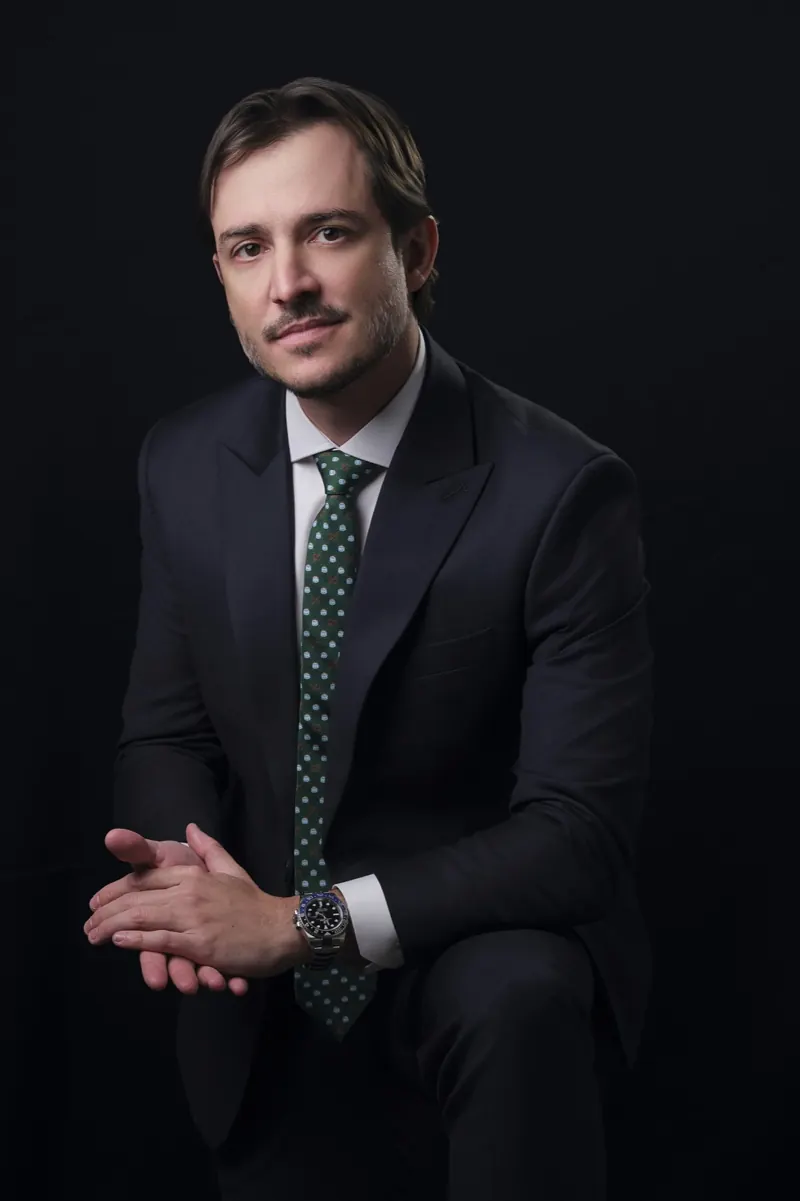
Brazilian medicine is regulated by the Federal Council of Medicine (CFM), and every physician holds a license number issued by a state council, the CRM. Training is long: six years of medical school followed by residency, which for otolaryngology and facial surgery adds several more years. Specialists who completed accredited training receive an RQE, a registered specialist qualification that you can check online on the state council website. Dr. Guilherme Sella holds CRM-PR 33.018 and RQE 17.984. Quality varies by surgeon and hospital, so verify credentials, surgical volume, and the facility's ICU and anesthesia structure before you travel.
Why "is Brazilian medicine good" is the wrong first question
Countries do not operate on you. Surgeons do, inside a specific hospital, with a specific anesthesia team. Brazil has excellent university hospitals and also has clinics that would not meet your expectations. The same is true of the United States, Europe and Turkey.
So the practical approach is to understand the Brazilian system well enough to verify one person and one facility. That is what this page gives you: how training works, what the regulator requires, what to look for in a hospital, and a checklist you can complete in about fifteen minutes from your own country.
How doctors are trained in Brazil
Medical school in Brazil lasts six years and is entered directly after secondary school, through highly competitive entrance exams. There is no separate pre-medical degree. The final two years are clinical internship inside hospitals.
After graduation, a physician who wants to be a specialist competes for a residency position. Residency in otolaryngology, also called ear, nose and throat surgery, is a full hospital-based program with progressive surgical responsibility. Facial plastic surgery and rhinoplasty are then developed through fellowships, academic degrees and continued international training.
Dr. Sella's own path follows that structure: medical degree, residency in otolaryngology at the Hospital das Clínicas of the Ribeirão Preto Medical School of the University of São Paulo, a direct doctorate in Morphophysiology of Facial Structures at the same institution concluded in 2018, and a rhinoplasty fellowship in Melbourne and Sydney, Australia. You can read the full academic record on the page about Dr. Guilherme Sella.
CFM, CRM and RQE: the three words that matter
Brazilian medicine is regulated nationally by the Conselho Federal de Medicina, the CFM. Each state has a regional council, the CRM, which issues the license number that every physician must display in advertising and documents.
The RQE, Registro de Qualificação de Especialista, is the registered specialist qualification. It is granted when the physician completes an accredited residency or obtains a specialist title from the recognized national society, and it is linked to a specific specialty. A doctor without an RQE in a given field is not registered as a specialist in that field.
Both numbers are public. You can search a physician's name on the state council website and see the license status and the registered specialties. This is the single most useful verification step available to an international patient.
What to verify before you travel
| What to check | Where to check it | What a good answer looks like |
|---|---|---|
| Medical license | State council website, CRM number | Active license, no suspension |
| Specialist registration | Same search, RQE field | RQE listed in the relevant specialty |
| Residency and degrees | Surgeon's website, academic CV, Lattes platform | Named hospital and university, dates |
| Published research | PubMed search by author name | Peer-reviewed articles in the field |
| Teaching activity | Congress programs, course pages | Invited lectures, structured courses |
| Hospital | Facility website, photos, accreditation | Operating rooms, adult ICU, 24-hour intensivists |
| Anesthesia | Ask directly in consultation | Dedicated anesthesiologist, not a rotating stand-in |
| Follow-up plan | Written schedule | Defined visits at 1, 3, 6 and 12 months |
For rhinoplasty specifically, ask how many the surgeon performs, which techniques are routine, and who manages a complication if one occurs after you fly home. Dr. Sella has performed more than 1,500 rhinoplasties and publishes on dorsal preservation in peer-reviewed journals, including articles in Facial Plastic Surgery Clinics of North America in 2023 and 2025.
Hospital and ICU standards
Anesthesia safety is the part patients research least and should research most. A facial surgery under general anesthesia should happen in a facility with monitored recovery, an adult intensive care unit and intensivists available around the clock.
Rhinoplasty with Dr. Sella is performed at Saine Health Complex in Maringá, a boutique hospital of 7,500 square meters with 11 operating rooms, adult and neonatal ICU, 24-hour intensive care physicians and hyperbaric medicine. Patients usually stay 12 to 24 hours. Smaller procedures under local anesthesia, such as upper blepharoplasty, otoplasty, chin implant and fat grafting, can be done in the clinic, while deep plane facelift, deep neck, forehead lift and CO2 laser are hospital procedures.
This distinction matters. A surgeon who performs everything in an office without hospital backup is making a different safety choice from one who reserves general anesthesia for a hospital environment.
Surgical volume and the Brazilian tradition
Brazil has a long academic tradition in plastic and facial surgery, historically associated with the school of Ivo Pitanguy, and international surveys by ISAPS consistently place the country among those with the highest volume of aesthetic procedures worldwide. High volume alone is not a quality marker, but it produces something useful: large residency programs, frequent congresses and surgeons who operate often.
It also means Brazilian surgeons are visible internationally. Dr. Sella has been an invited faculty member in more than ten countries, including Turkey, the United States, Spain, Mexico, Peru, Argentina and Ecuador, and taught two sessions at the All in One Rhinoplasty Congress in Istanbul in 2025, on dorsal preservation and secondary rhinoplasty. He also teaches Brazilian and foreign surgeons through the Sella Learning Center and an annual fellowship.
Teaching is a reasonable proxy for peer recognition. Surgeons invited to operate in front of colleagues are being evaluated by people who know how to evaluate.
Cost, and what it does and does not mean
Surgery in Brazil generally costs less than in the United States or Western Europe. The reasons are structural: local fee levels, hospital costs and currency exchange. Lower cost in this context does not mean lower training or thinner hospital structure.
What it also does not mean is that price should drive the decision. A quoted figure that is far below everything else you have seen usually reflects a shorter operation, a less equipped facility or a surgeon early in the learning curve. Quotes at this practice are given only after consultation, because the technique, operative time and grafts change the plan, and they include the surgical team, hospital, anesthesia and follow-up visits.
How the process works from abroad
International patients and Brazilians living overseas are seen regularly in Maringá. The sequence is a video consultation first, preoperative tests done in your own city, arrival one or two days before surgery, and roughly seven days in Maringá until the external cast comes off. Flying is released after the cast is removed. Follow-up happens at 1, 3, 6 and 12 months, in person or online.
The team speaks Portuguese, English and Spanish, and issues documentation in English or Spanish on request. Practical details are on the international patients page, and the techniques used are described under rhinoplasty and preservation rhinoplasty.
Maringá has an airport with direct flights from São Paulo and Curitiba, and road access from inland São Paulo state, Mato Grosso do Sul and Paraguay.
When to see Dr. Sella
Book a consultation when you want an individual assessment rather than a general answer about a country. The appointment lasts about one hour and includes history, internal nasal examination, standardized photographs, digital simulation, discussion of technique and the postoperative timeline, with high-frequency facial ultrasound when indicated. Indication, risks and surgical plan are always defined individually. Start with a video call through the contact page.

Otolaryngologist and facial plastic surgeon · CRM-PR 33.018 · RQE 17.984. PhD from FMRP-USP, founder of the Sella Learning Center. Updated on 2026-10-15.
Frequently asked questions
How long does it take to become a surgeon in Brazil?
Medical school lasts six years and is entered directly after secondary school. A specialist then completes a hospital residency, and surgeons who focus on rhinoplasty usually add fellowships, academic degrees and ongoing international training after that.
What is an RQE and why should I ask for it?
RQE stands for Registro de Qualificação de Especialista, the specialist qualification registered with the medical council. It confirms that the physician completed accredited training in that specialty, and it can be checked for free on the state council website.
Can I verify a Brazilian doctor from another country?
Yes. The regional medical council websites allow a public search by name or license number and show whether the license is active and which specialties are registered. You can also search the surgeon's name on PubMed to see peer-reviewed publications.
Are Brazilian hospitals equipped for facial surgery under general anesthesia?
Many are. Ask specifically about operating room structure, adult ICU and the presence of intensive care physicians around the clock. Rhinoplasty with Dr. Sella is performed at a hospital in Maringá with 11 operating rooms, adult and neonatal ICU and 24-hour intensivists.
Is surgery in Brazil cheaper because quality is lower?
Lower cost generally reflects local fee structures, hospital costs and currency exchange rather than training or facilities. Price should never be the main criterion, and a quote far below the market usually signals a difference in technique, facility or experience.
How long do international patients stay in Maringá?
Around seven days after surgery, until the external cast is removed, plus one or two days before the operation. Flying is released after cast removal, and follow-up visits at 1, 3, 6 and 12 months can be done online.
Does a plastic surgery title mean the same thing as an otolaryngology title in Brazil?
No. The RQE is tied to a specific specialty, so a physician may be registered in otolaryngology, in plastic surgery, or in another field entirely. Rhinoplasty and facial surgery are performed by both otolaryngologists and plastic surgeons in Brazil, and what matters is that the registration exists and that the surgeon's practice is concentrated in the operation you want. Dr. Sella is registered under CRM-PR 33.018 and RQE 17.984 in otolaryngology, with a doctorate in Morphophysiology of Facial Structures and a rhinoplasty fellowship in Australia.
What should I ask about the hospital before booking surgery in Brazil?
Ask where the surgery is performed, whether the facility has an adult ICU and anesthesiologists available around the clock, and how long you will stay after the operation. Facial surgery under general anesthesia should not be done in a structure without those resources. Dr. Sella's rhinoplasties are performed at a hospital in Maringá with surgical centers, adult and neonatal ICU and intensivists on site, with an overnight stay of roughly twelve to twenty four hours.
Is it safe to have a first consultation online before traveling to Brazil?
A teleconsultation is a reasonable first step for patients living abroad. It allows review of your history, photographs and goals, and a discussion of what is technically possible before you commit to flights. A full in person assessment with internal nasal examination, standardized photographs and digital simulation is still done in Maringá before the surgical plan is finalized.
Can I get documents in English or Spanish for my insurance or visa?
Yes. The team communicates in Portuguese, English and Spanish, and can issue surgical reports and documentation in English or Spanish on request. For the functional part of nasal surgery, such as septoplasty or turbinate reduction, documentation can also be provided so you can submit a reimbursement claim to your own insurer. Reimbursement rules depend entirely on your plan and country.
Book a consultation with Dr. Guilherme Sella
In person in Maringá, Brazil, or by video consultation. English-speaking team.