

Medical tourism in Brazil: your rhinoplasty safety checklist.
Brazil has a long surgical tradition and a high volume of facial procedures. Safety abroad comes from verification: the surgeon's registration, the operating facility, the written plan and the follow-up you will actually receive.
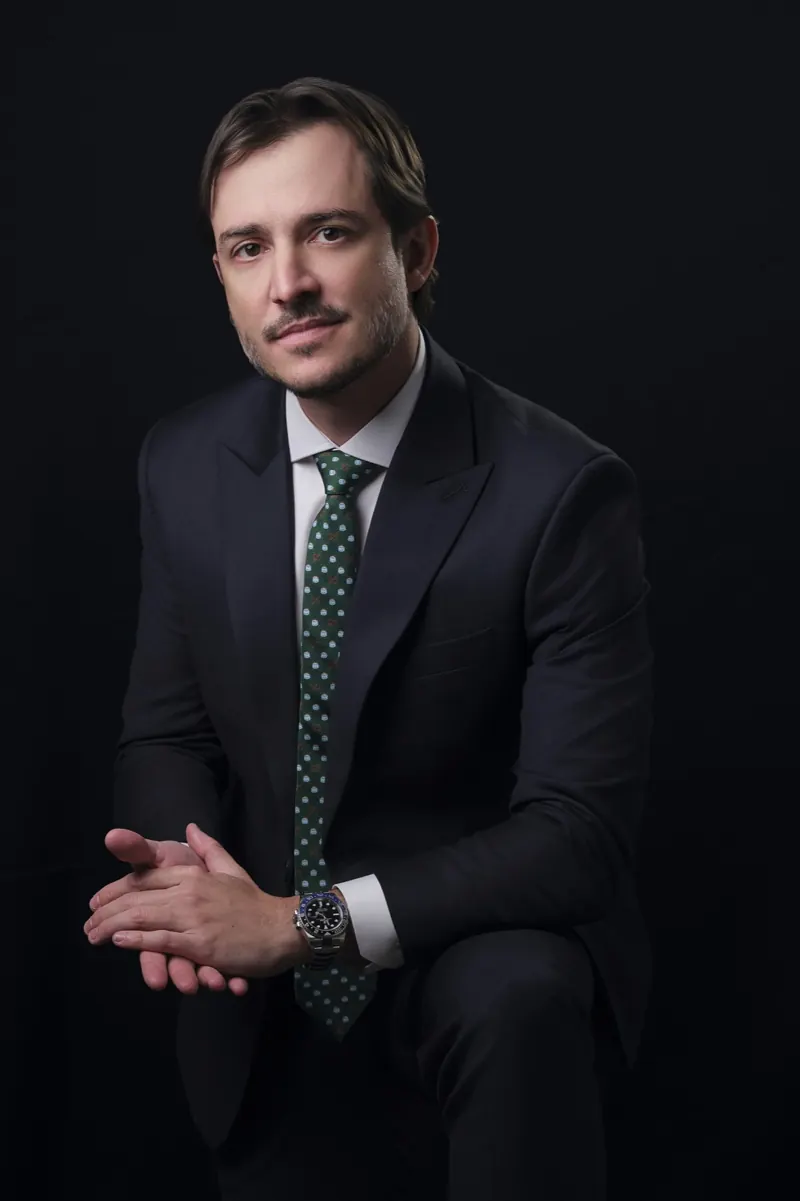
Medical tourism in Brazil can be safe when you verify five things before booking. First, confirm the surgeon's CRM registration and RQE specialist title on the state medical board website, since Brazilian practice is regulated by the Federal Council of Medicine. Second, confirm the surgery happens in a hospital with an ICU and a dedicated anesthesiologist. Third, require a written surgical plan after a real consultation. Fourth, agree on a follow-up policy covering the first 12 months. Fifth, organize records and insurance before you fly. Dr. Guilherme Sella operates in Maringá and treats international patients under this structure.
Is it safe to have rhinoplasty in Brazil?
It can be, and it can also go badly. The difference is almost never the country. It is the specific surgeon, the specific facility and the specific plan.
Brazil has a strong surgical tradition in facial and plastic surgery, with a formal residency system, university hospitals and an active scientific community. International surveys by ISAPS consistently place the country among those with the highest volume of aesthetic procedures in the world. Costs tend to be lower than in the United States and Western Europe because of exchange rates and the way surgeon, hospital and anesthesia fees are structured.
High volume also means a crowded market. Some of what you see online is marketing with no verifiable credential behind it. Your job as a patient is to check facts, not impressions. The checklist below is what the team applies to every international case seen in Maringá.
Step 1: Verify the surgeon's CRM and RQE
In Brazil, every physician holds a CRM number issued by the medical board of the state where they practice. Specialists who completed accredited training also hold an RQE, the registry of specialist qualification, linked to a specific specialty.
You can check both on the CRM website of the state. Search the name, confirm the registration is active, and confirm the RQE matches the specialty relevant to your operation. Rhinoplasty is legitimately performed by otolaryngologists and by plastic surgeons in Brazil, so look for one of those titles.
Dr. Sella holds CRM-PR 33.018 and RQE 17.984 in Otolaryngology, with residency at the Clinical Hospital of the Ribeirão Preto Medical School, University of São Paulo, a direct doctorate in morphophysiology of facial structures at the same institution, and certification by the European Board in Facial Plastic and Reconstructive Surgery. His background is detailed on the page about the surgeon.
Two extra signals that are easy to verify:
- Peer reviewed publications. Search PubMed or ORCID for the surgeon's name. Teaching and publishing are public, traceable activities.
- Society membership. Titular membership in national societies such as ABORL-CCF or ABCPF is listed by the societies themselves.
Step 2: Check the facility, the ICU and the anesthesia team
Ask where the operation happens and who gives the anesthesia. These are two separate questions and both matter.
Rhinoplasty under general anesthesia should be performed in a licensed hospital or surgical center with an anesthesiologist dedicated to your case, full monitoring, recovery room and access to intensive care. Procedures done under pure local anesthesia, such as upper blepharoplasty or otoplasty, can be safely performed in a properly equipped clinic.
Cases operated by Dr. Sella take place at the Saine Health Complex in Maringá, a 7,500 square meter hospital with 11 operating rooms, adult and neonatal ICU, intensivists on site 24 hours and hyperbaric medicine. Overnight admission is 12 to 24 hours.
Red flag: an operation under general anesthesia offered in an office with no ICU access and no named anesthesiologist.
Step 3: Require a real consultation and a written plan
No serious plan comes from photos sent by message and a quote the same day. A proper consultation takes around an hour and includes history, physical examination with internal inspection of the nose, standardized photographs, digital simulation and an explanation of the technique.
For patients abroad, this happens as a teleconsultation first, with the in person examination completed before surgery. High frequency dermatologic ultrasound is used when indicated, to assess skin thickness, previous fillers, grafts, fractures and columellar vascularization.
What the written plan should contain:
- The diagnosis, including functional findings such as septal deviation or valve collapse.
- The technique proposed, for example dorsal preservation or structural grafting, open or closed approach.
- Expected operating time and type of anesthesia.
- Grafts that may be needed and where they come from.
- Realistic limits of the simulation. A digital simulation represents roughly 60 to 70 percent of the likely result.
- Risks, including the published revision rate in rhinoplasty literature of about 5 to 15 percent.
A quote should only arrive after the consultation, because it depends on technique, surgical time and grafts. It should state what is included: surgical team, hospital, anesthesia and follow-up visits.
Step 4: Agree on the follow-up policy before you buy the ticket
Rhinoplasty is not a weekend trip. Swelling resolves over months and the definitive result appears between 6 and 12 months, up to 18 months in thick skin or revision cases.
A workable international timeline looks like this:
| Moment | What happens |
|---|---|
| 1 to 2 days before | Arrival, in person examination, preoperative tests reviewed |
| Surgery day | General anesthesia, 3 to 5 hours, admission of 12 to 24 hours |
| Days 1 to 7 | Rest with head elevated, ice in the first weeks, cast in place |
| Around day 7 | Cast removal, taping starts, flying is released |
| Months 1, 3, 6, 12 | Follow-up visits, in person or online |
Plan roughly 7 days in the city. A companion during the first week is recommended. Ask directly what happens if healing deviates from the expected course, who answers messages, and how a revision would be handled. Revisions are only considered after 12 months, when tissues have settled. Any surgeon who promises a flawless outcome is telling you something medicine cannot deliver; what you should expect is a clear plan, honest limits and continuity of care.
Step 5: Documents, records and insurance
Carry paper and digital copies of everything. This is what protects you when you are far from the surgical team.
- Preoperative tests performed in your home city, with dates.
- Full list of medications, allergies and prior surgeries.
- Operative report and discharge summary, issued before you fly home.
- Prescriptions and wound care instructions in a language you read. The clinic issues documentation in English and Spanish on request, and the team communicates in Portuguese, English and Spanish.
- Contact channel for the team during the first months.
On insurance, two points. The practice is private and does not contract with health plans, and documentation is provided so you can file a reimbursement claim with your insurer, including the functional portion such as septoplasty, turbinate surgery or sinus surgery. Separately, check in writing with your travel or health insurer whether elective surgery abroad and its complications are covered, since many policies exclude them. Do this before the trip, not after.
Quick red flag list
- No verifiable CRM or RQE.
- A price given before any consultation.
- Pressure to book immediately or pay in full to hold a date.
- General anesthesia proposed outside a hospital environment.
- Promises of a specific, flawless outcome.
- No named anesthesiologist and no ICU access.
- Surgery and return flight scheduled in the same week, before cast removal.
- Packages that bundle several major operations into a single short trip without individual assessment.
How the structure works in Maringá
Maringá is served by MGF airport, with direct flights from São Paulo and Curitiba, and is accessible by road from inland São Paulo, Mato Grosso do Sul and Paraguay. The clinic is on Avenida Cidade de Leiria, in Zona 01, with partner parking next door.
The practice combines functional and aesthetic nasal surgery in the same operation when indicated, since the surgeon is an otolaryngologist. Techniques used include preservation and ultrasonic rhinoplasty with piezoelectric instruments, as well as structural grafting. General information about the procedure is on the rhinoplasty page.
When to see Dr. Sella
Consider an initial teleconsultation if you are planning surgery in Brazil and want the plan, the facility and the follow-up defined in writing before you commit to travel. Indication, risks and technique are individual and are decided only after examination. You can start the conversation through the contact page or the international patients page.

Otolaryngologist and facial plastic surgeon · CRM-PR 33.018 · RQE 17.984. PhD from FMRP-USP, founder of the Sella Learning Center. Updated on 2026-10-15.
Frequently asked questions
How do I verify a Brazilian surgeon's credentials from abroad?
Search the physician's name or CRM number on the website of the state medical board, for example CRM-PR for Paraná. Confirm the registration is active and that an RQE specialist title is listed for the relevant specialty. Publications on PubMed and membership in national societies are additional public checks.
How long do I need to stay in Brazil after rhinoplasty?
Plan on arriving 1 to 2 days before surgery and staying about 7 days, until the external cast is removed. Flying is generally released after cast removal. Follow-up visits at 1, 3, 6 and 12 months can be in person or online.
Does health insurance cover rhinoplasty performed in Brazil?
The practice is private and does not contract with health plans. Documentation is issued so you can submit a reimbursement claim to your own insurer, including the functional part such as septoplasty or turbinate surgery. Check your policy in writing before traveling, since many plans exclude elective surgery abroad.
What should the hospital have for a rhinoplasty under general anesthesia?
A licensed operating room, full monitoring, a dedicated anesthesiologist, a recovery area and access to intensive care. Surgeries by Dr. Sella are performed at a hospital in Maringá with 11 operating rooms, adult and neonatal ICU and intensivists on site 24 hours.
Is it safe to combine rhinoplasty with other facial procedures on the same trip?
Sometimes, depending on total surgical time, your health status and the recovery each procedure demands. Combining several major operations only to save a trip is not a medical reason. The decision is made individually during consultation.
What happens if I need a revision after I return home?
Revision rates in the rhinoplasty literature range from about 5 to 15 percent, and any revision is only considered after 12 months, when swelling has resolved. Agree on the follow-up and revision policy in writing before surgery, and keep your operative report and photographs.
Can I have the first consultation by video before flying to Brazil?
Yes. International patients usually start with a teleconsultation in Portuguese, English or Spanish, where Dr. Sella reviews your history, your photos and your goals, and explains which techniques may apply. A full in person assessment is still done in Maringá before surgery, including internal examination of the nose, standardized photographs and digital simulation. The final plan and the estimate are only defined after that evaluation.
What documents should I bring or organize before travelling for surgery?
Bring your preoperative exams done in your home city, a list of medications and allergies, previous operative reports if you had nasal or facial surgery, and your travel or health insurance details. The clinic can issue documentation in English or Spanish when requested, which helps with reimbursement requests and with any care you may need after returning. Organizing all of this before boarding avoids delays in the days before the operation.
When is it safe to fly home after rhinoplasty?
Flying is generally released after the external cast is removed, which happens around seven days after surgery. Until then you stay in Maringá for the early checks, and most patients arrive one or two days before the operation to complete exams and the final consultation. Your individual timing depends on how your recovery progresses and is confirmed by the team before you book the return ticket.
Do I need someone to travel with me?
A companion is recommended for the first week, especially for the hospital stay and the first days at the hotel, when swelling, nasal congestion and tiredness are common. If travelling alone is your only option, tell the team in advance so support can be organized, including help with transport and hotel choice. The team is reachable by WhatsApp during the whole stay for questions and urgent situations.
Book a consultation with Dr. Guilherme Sella
In person in Maringá, Brazil, or by video consultation. English-speaking team.