

Revision rhinoplasty in Brazil, planned from abroad.
A second nose operation demands more information than the first one did. Here is how records, imaging and timing are organized before you book a flight to Maringa, and what the week in Brazil actually looks like.
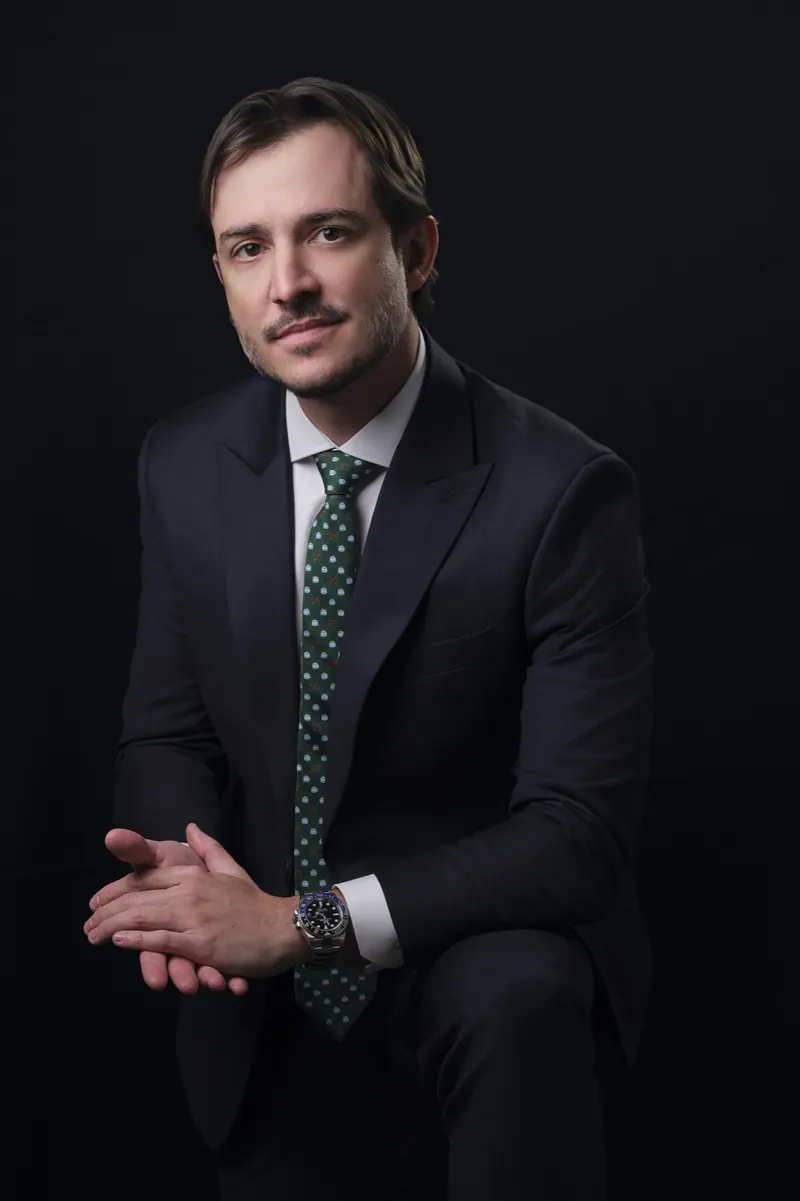
A revision rhinoplasty in Brazil can be planned almost entirely from abroad. The sequence is predictable: send your previous operative report, old photos and any imaging; do a teleconsultation to define what is realistic; wait at least 12 months after the last surgery so tissues are settled; and arrive one to two days early for an in-person exam, standardized photos and high-frequency nasal ultrasound, which maps skin thickness, old grafts and residual filler. Plan about 7 days in Maringa until the cast comes off. Dr. Guilherme Sella, an ENT surgeon with a USP doctorate, defines indication and technique only after that evaluation.
Why a revision is a different operation
A first rhinoplasty works with known anatomy. A revision works with anatomy that has already been changed, sometimes twice or three times. Cartilage may have been removed, scarred or displaced. Skin may be thicker, thinner or adherent. Internal valves may have collapsed, which is why many revision patients arrive complaining about breathing as much as about shape.
That is the practical reason a revision takes longer in the operating room and longer to plan. Surgical time is usually above the 3 to 5 hours of a primary case. The published literature places revision rates after rhinoplasty somewhere between 5 and 15 percent, which tells you this is a common situation, not a personal failure.
For patients living outside Brazil, the extra planning is actually an advantage. Everything that can be prepared at distance should be prepared before the flight. More on the general structure of a revision rhinoplasty.
What to gather before the teleconsultation
The quality of the plan depends on the quality of the information you send. Ideally:
- Operative report of every previous nasal surgery, in any language. A scanned PDF is enough.
- Information on what was used: septal cartilage, ear cartilage, rib, implants, synthetic material.
- Photos before the first surgery, not only recent ones. They show what your nose was originally.
- Any CT scan of the sinuses already performed.
- A short written list of what bothers you, separated into breathing and appearance.
- History of fillers, threads or any non surgical nasal procedure, with dates.
If the report is unavailable, the case is not blocked. It simply means more of the mapping will be done by examination and ultrasound after arrival. Say so openly instead of guessing.
High-frequency nasal ultrasound before a revision
In the clinic in Maringa, high-frequency dermatologic ultrasound is used in selected preoperative evaluations. In a revision, it answers questions that photographs cannot:
- Skin thickness along dorsum, supratip and tip, which predicts how much definition is possible and how long swelling will last.
- Presence of residual filler, including material injected years ago and material the patient was told would be absorbed.
- Position and behavior of previous grafts.
- Old bone fractures and irregularities of the dorsum.
- Columellar vascularization, relevant when the skin has been operated more than once.
- Characteristics of the rib when costal cartilage is being considered.
This matters because injecting or operating over unidentified material raises risk. The exam is painless, takes minutes and is performed in the same clinic by Dra. Nubia Goedert Soares Sella, a radiologist. It is also part of how ultrasonic rhinoplasty and preservation techniques are planned.
The 12-month rule
A nose is not finished when the cast comes off. Definitive results after a primary rhinoplasty appear between 6 and 12 months, and up to 18 months in thick skin or in noses already operated. Operating before that means operating on edema, not on the final shape.
The practical rule used in consultation is to wait at least 12 months after the last surgery before a revision, except in situations such as significant functional obstruction or a clearly displaced structure. Two exceptions to the waiting logic are worth knowing:
- Breathing problems can sometimes be addressed earlier, since nasal valve or septal issues do not improve with time.
- If filler was injected into an operated nose, planning may begin earlier, because the ultrasound findings influence what can be done.
Grafts: septum, ear or rib
Most revisions need material to rebuild support. The source depends on what remains.
| Source | Typical use | What to know |
|---|---|---|
| Septal cartilage | Tip support, spreader grafts, columellar strut | Often already harvested in the first surgery, so availability must be confirmed |
| Ear cartilage | Lateral wall, alar support, camouflage | Naturally curved, obtained through a hidden incision |
| Autologous rib | Dorsal reconstruction, major structural rebuild, severe collapse | Adds operative time and a chest incision; ultrasound helps assess which rib and its degree of calcification |
| Diced cartilage and soft tissue | Camouflage of irregularities | Used to smooth contour over a reconstructed framework |
The surgeon's background is in structured rhinoplasty, with a fellowship in Melbourne and Sydney, combined with dorsal preservation techniques. Preservation is not limited to primary cases. Published work by Dr. Sella and colleagues in Facial Plastic Surgery Clinics of North America discusses expanding indications for dorsal preservation, and part of the discussion involves previously operated noses. You can read about the principle of preservation rhinoplasty.
Whether your case needs rib, ear or neither is decided after examination and imaging. Nobody can define that from a photo sent by message.
Logistics for patients traveling to Brazil
| Phase | When | What happens |
|---|---|---|
| Teleconsultation | Weeks to months before | Review of reports and photos, discussion of goals and limits |
| Lab tests and imaging | In your city | Performed locally, sent in advance |
| Arrival in Maringa | 1 to 2 days before | In-person exam, standardized photos, digital simulation, nasal ultrasound when indicated |
| Surgery | Day 0 | General anesthesia, 12 to 24 hours at Saine Health Complex |
| Recovery in the city | Days 1 to 7 | Saline irrigation, elevated head, ice in the first weeks |
| Cast removal | Around day 7 | Taping for another week, flight released |
| Follow-up | 1, 3, 6 and 12 months | In person or online |
Maringa is served by MGF airport with direct flights from Sao Paulo and Curitiba. The team communicates in Portuguese, English and Spanish, issues documentation in English or Spanish on request, and suggests accommodation near the clinic. A companion during the first week is recommended. Full details on international patients.
Consultations and surgery are private. The clinic provides documentation so you can request reimbursement from your insurer, including the functional portion when septum, turbinates or sinuses are treated. The surgical estimate is given only after the consultation, since it depends on technique, operative time and grafts.
Realistic expectations
Digital simulation reproduces roughly 60 to 70 percent of the final result. In a revision, that margin is wider, because scar tissue behaves less predictably than virgin tissue. A honest revision plan often prioritizes breathing and structural stability first, and refinement second. Thick or previously operated skin takes longer to deflate, and patience in month three is part of the treatment.
When to see Dr. Sella
Consider booking an evaluation if your last nasal surgery was more than 12 months ago and you still have breathing difficulty, an irregularity you notice daily, or a shape that drifted over time. Bring your operative reports and old photos. Start with a teleconsultation through the contact page, or read more about the surgeon's training and publications. Indication, risks and technique are always individual and defined in consultation.

Otolaryngologist and facial plastic surgeon · CRM-PR 33.018 · RQE 17.984. PhD from FMRP-USP, founder of the Sella Learning Center. Updated on 2026-10-15.
Frequently asked questions
Do I really have to wait 12 months after my previous rhinoplasty?
In most cases yes, because swelling and scar maturation continue for 6 to 12 months, and up to 18 months in thick skin or operated noses. Significant breathing obstruction or a clearly displaced structure may be evaluated earlier, which is decided in consultation.
What if I cannot get my previous operative report?
The case can still be evaluated. The missing information is reconstructed through physical examination, standardized photos and high-frequency nasal ultrasound, which shows previous grafts, residual filler and skin thickness.
Will I need rib cartilage?
Not always. Septal and ear cartilage are often enough, and rib is reserved for cases needing major structural reconstruction. The decision depends on how much cartilage remains, which is assessed in person and with imaging.
How long should I stay in Brazil for a revision rhinoplasty?
Plan to arrive one to two days before surgery and stay around seven days until the external cast is removed, which is when flying is usually released. Follow-ups at 1, 3, 6 and 12 months can be in person or online.
Can I ask my health insurance to reimburse part of the surgery?
The practice is private, and the clinic provides the documentation needed to request reimbursement from your insurer, including the functional part such as septoplasty, turbinoplasty or sinus surgery. Approval depends entirely on your plan.
Is the result of a revision as predictable as a first rhinoplasty?
It is less predictable, because scar tissue and altered anatomy behave differently. Digital simulation reproduces roughly 60 to 70 percent of the result, and expectations are discussed openly before any surgical decision.
I had filler in my nose years ago and was told it would dissolve. Does that change the plan?
It can. High-frequency nasal ultrasound often shows residual material in patients who were told it had been fully absorbed, and that material may need to be addressed before or during surgery. Bring the dates and, if possible, the name of the product used. The ultrasound is performed in the clinic in Maringa and the findings are discussed with you at the in-person consultation.
My main complaint after the first surgery is breathing, not appearance. Is that still a revision rhinoplasty?
Yes. Many revision patients have collapsed internal or external valves, deviated remnants of septum or over-reduced structures that compromise airflow. The functional part, such as septoplasty, turbinoplasty and valve reconstruction, is planned together with the aesthetic part in the same operation. Dr. Sella examines the inside of the nose at the consultation before defining what is causing the obstruction.
Can a revision be done through a closed approach, or is it always open?
Both are possible. Limited problems, such as a small dorsal irregularity, can sometimes be corrected through a closed approach, while cases needing graft reconstruction of tip or valves usually benefit from the open approach. The decision depends on what the examination and ultrasound show, and it is explained to you before the surgery date is set.
How many revision surgeries can a nose tolerate?
There is no fixed number, but each operation leaves scar tissue, reduces available cartilage and makes the skin less forgiving, so the goal is to plan the next one as the last one. That is exactly why the evaluation before a revision is longer and why the 12-month interval matters. The realistic limits of your case are discussed openly at the consultation, including what cannot be changed.
Book a consultation with Dr. Guilherme Sella
In person in Maringá, Brazil, or by video consultation. English-speaking team.