

A second opinion on your rhinoplasty plan, by video.
Before committing to surgery, many patients want a structured review of the plan they were given. A video consultation can clarify technique, anatomy and timing, in English, Portuguese or Spanish.
An online rhinoplasty second opinion is a scheduled video consultation in which a surgeon reviews your nose, your goals and the plan you were already offered. With Dr. Guilherme Sella, the appointment lasts about one hour and includes history taking, review of standardized photos you send in advance, discussion of functional complaints such as nasal obstruction, an explanation of which techniques would apply to your anatomy, and a realistic postoperative timeline. Digital simulation can be used as a communication tool, not a promise. Any final indication requires an in-person examination, including internal examination of the nose.
What an online second opinion is, and what it is not
A second opinion is a structured review of information you already have. You bring your photos, your complaints, any imaging or surgical reports, and the plan another surgeon proposed. The goal is to understand the reasoning behind that plan and to see whether a different technical approach would also be reasonable for your anatomy.
It is not a diagnosis at distance. It is not a verdict on another professional's work. And it is not a commitment to operate. Many patients finish the call and decide to proceed with their original surgeon, now understanding the plan much better. That is a legitimate outcome.
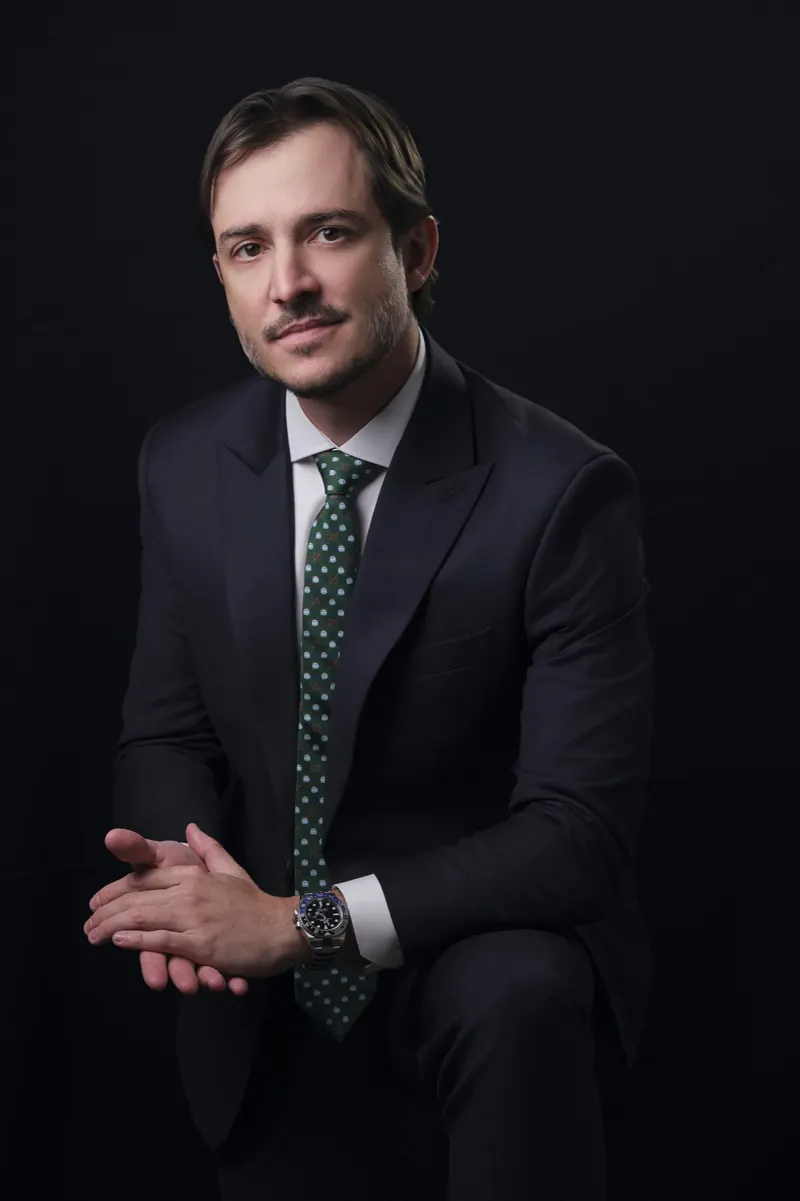
Dr. Sella is an ENT surgeon with a doctorate in morphophysiology of facial structures from HCFMRP-USP and published work on dorsal preservation in Facial Plastic Surgery Clinics of North America. That background shapes how a second opinion is conducted: breathing and structure are discussed alongside aesthetics, never separately.
How the video consultation works
The appointment is booked through the team by WhatsApp or email, with a time slot that accounts for your time zone. Consultations are private pay, as the entire practice is, and the clinic issues documentation in English or Spanish when requested.
The call itself follows the same structure as an in-person visit in Maringá, minus the physical examination:
- History. Previous surgeries, trauma, allergies, fillers, breathing pattern, sleep, sports, medication.
- Review of your material. Photos, CT scan reports, surgical descriptions, and the plan you received.
- Anatomy discussion. What is driving the shape you see: dorsum, tip support, septum, nasal bones, skin thickness.
- Technique options. Where dorsal preservation, ultrasonic reshaping or structural grafting would apply, and why.
- Simulation. When the photos allow, a digital simulation is used to align expectations.
- Timeline and logistics. Recovery stages, travel windows, follow-up schedule.
You can invite a family member to join the call. Patients are seen in Portuguese, English or Spanish.
What to send before the call
The quality of a remote opinion depends almost entirely on the quality of what you send. Material should arrive at least two days before the appointment so it can be reviewed in advance.
| Item | Why it matters |
|---|---|
| Frontal, both profiles, both obliques and basal (worm's eye) photos | Standard views allow assessment of dorsal line, projection, rotation and tip definition |
| Neutral light, hair pulled back, no makeup, no filters | Filters and ring lights distort the dorsum and nostril shape |
| Smiling frontal and profile photos | Shows tip behavior with muscle activity |
| Short video turning the head slowly | Gives depth that static photos miss |
| Sinus or facial CT scan report, if you have one | Documents septal deviation, turbinates, sinus disease |
| Previous operative report | Essential in revision cases, indicating what was removed or grafted |
| List of fillers or threads placed in the nose, with dates | Changes planning and skin assessment |
| Current medications and health conditions | Affects anesthesia and bleeding risk |
If you had hyaluronic acid rhinomodeling, say so even if it was years ago. If you were told a permanent product such as PMMA or silicone was injected, that information changes the discussion entirely.
What you receive after the consultation
The output of a second opinion is clarity, not paperwork. By the end of the call you should be able to explain, in your own words, three things: what anatomic features create the result you dislike, which surgical maneuvers address them, and what the recovery would demand of your calendar.
Practically, patients leave with:
- An explanation of whether the proposed plan is consistent with what the photos show.
- A description of the technique the surgeon would consider, including preservation rhinoplasty and ultrasonic reshaping when applicable.
- Discussion of functional surgery such as septoplasty or turbinoplasty, when breathing complaints exist.
- A realistic recovery timeline, including the roughly seven days with an external cast.
- Information on travel planning for international patients.
A surgical quote is only provided after a consultation, because it depends on technique, operative time and grafts. Nothing about cost is discussed before the plan exists.
Second opinion before a first surgery versus before a revision
The two scenarios need different depth.
For a primary rhinoplasty, the conversation is usually about approach and philosophy. How much of the dorsum needs to be changed, whether the bony vault can be preserved, how skin thickness will affect definition, and how long the final result takes to settle. Definitive results generally appear between six and twelve months.
For a revision, the second opinion is mostly about what is missing. Cartilage reserves, scar tissue, skin quality and support structures must be mapped before any promise of improvement is reasonable. Revision rates reported in the rhinoplasty literature sit broadly between 5 and 15 percent, and reoperation is generally only considered after twelve months. The revision rhinoplasty page explains why timing matters so much.
In the clinic, high frequency dermatologic ultrasound is sometimes used before surgery to assess skin thickness, previous fillers, grafts and columellar vascularization. That examination cannot be done remotely, which is one reason the in-person visit remains part of the path.
Honest limits of a remote assessment
Some things simply cannot be judged through a screen:
- Internal examination of the septum, valves and turbinates.
- Real skin thickness and elasticity on palpation.
- Tip support and cartilage resilience.
- Presence of residual filler in deeper planes.
For this reason, a digital simulation is treated as a communication tool with roughly 60 to 70 percent similarity to the eventual result, and every remote plan is described as provisional. Indication, risks and technique are confirmed only after an in-person evaluation. Patients traveling to Maringá typically arrive one or two days before surgery, which allows time for that examination before anything is scheduled definitively.
Questions worth asking in any second opinion
Use the call. A few questions tend to reveal how well a plan was thought through:
- Which specific anatomic structures explain what I dislike about my nose?
- Will my breathing be addressed in the same procedure?
- Open or closed approach, and why for my case?
- Will grafts be needed, and where would they come from?
- What does the recovery calendar look like week by week?
- What is the plan if the result is not what we expected?
More about training, publications and surgical philosophy is available on the pages about Dr. Guilherme Sella and rhinoplasty.
When to reach out to Dr. Sella
A second opinion makes sense when you have a plan you do not fully understand, when breathing problems were not discussed, when a previous surgery left you unsatisfied, or when you are planning surgery abroad and want to compare approaches before booking flights. The team can be reached through the contact page to arrange a video consultation and explain what material to send. Every indication is individual and defined in consultation.

Otolaryngologist and facial plastic surgeon · CRM-PR 33.018 · RQE 17.984. PhD from FMRP-USP, founder of the Sella Learning Center. Updated on 2026-10-15.
Frequently asked questions
Can a rhinoplasty be planned entirely online?
No. A video consultation allows detailed discussion of goals, anatomy seen in photos and technique options, but internal examination of the nose and assessment of skin and cartilage by palpation require an in-person visit. The remote plan is always provisional.
What photos should I send for an online rhinoplasty second opinion?
Frontal, both profiles, both obliques and a basal view, in neutral light, with hair pulled back and without makeup or filters. A short video turning the head slowly and smiling photos are also helpful.
Will I get a price during the online consultation?
No quote is given before the consultation, because it depends on technique, operative time and grafts. The budget is discussed after the plan is defined and includes surgical team, hospital, anesthesia and follow-up visits.
In which languages is the video consultation available?
Portuguese, English and Spanish. The clinic can also issue medical documentation in English or Spanish when requested, including reports used for insurance reimbursement requests.
Is a second opinion useful if I already trust my surgeon?
Yes. Many patients use it to understand their plan better and then proceed with their original surgeon. The purpose is clarity about anatomy, technique and recovery, not persuasion.
How long after my first surgery can I ask about revision?
Revision is generally considered only after twelve months, when swelling has resolved and tissues have settled. A second opinion before that point is still useful to understand what happened and what to monitor.
Do I need a CT scan before the video consultation?
A recent CT scan of the nose and sinuses is helpful when there is nasal obstruction, previous surgery or suspected sinus disease, but it is not mandatory for a first video call. If you already have one, send the report and the images with your photos so they can be reviewed in advance. When imaging is missing and the discussion suggests it would change the plan, Dr. Sella will tell you which exam to request in your own city.
How accurate is the digital simulation shown during an online consultation?
The simulation is a communication tool used to align what you want with what the anatomy allows, and it typically reflects around 60 to 70 percent of the final result. Skin thickness, healing and cartilage behavior all influence the outcome over six to twelve months. It is never presented as a promise of result, and the final plan still depends on an in-person examination, including the internal examination of the nose.
If I decide to operate with Dr. Sella after the video call, do I still need an in-person visit?
Yes. An in-person evaluation in Maringá is always done before surgery, because the internal examination of the nose, palpation of the tip and dorsum and standardized photography cannot be replaced remotely. Patients travelling from other states or countries usually arrive one or two days earlier, and this assessment is done then, together with high frequency dermatological ultrasound when indicated. Any adjustment to the plan is discussed with you before the procedure.
Can I ask for a second opinion only about my breathing, without aesthetic surgery?
Yes. Many consultations deal only with nasal obstruction, septal deviation, turbinates or nasal valve collapse, and functional treatment can be discussed on its own. Dr. Sella is an ENT surgeon, so breathing is always part of the conversation even when the main concern is shape. The clinic also issues documentation so you can request reimbursement from your health plan for the functional part when applicable.
Book a consultation with Dr. Guilherme Sella
In person in Maringá, Brazil, or by video consultation. English-speaking team.