

Thick skin asks for structure, not resection.
Thick skin hides small refinements and holds swelling longer. The plan changes: stronger cartilage framework, controlled soft tissue management and a timeline measured in months, not weeks.
In thick-skinned noses, definition comes from the cartilage framework, not from removing tissue. A heavy soft tissue envelope conceals small reductions and tends to fill empty spaces with scar and edema, which creates supratip fullness and a poorly defined tip. The modern approach favors structure over resection: solid tip support, grafts from septum, ear or rib, careful dead space control and conservative thinning of the subcutaneous layer. Dr. Guilherme Sella uses high-frequency dermatologic ultrasound before surgery to measure skin thickness, detect prior fillers and plan graft needs. Final results typically take 12 to 18 months.

What does "thick skin" mean in rhinoplasty?
The skin of the nose is not a single layer. Surgeons think of a soft tissue envelope that includes skin, a fibrofatty layer, a muscular layer, ligaments and the deep areolar plane that slides over cartilage and bone. When this envelope is thick, the underlying framework is less visible from outside.
Thick skin is more common in certain ethnic backgrounds and in oily, acne-prone skin, and it is usually most pronounced over the tip and supratip. It is not a defect. It brings real advantages: small irregularities of the dorsum are camouflaged, and the long-term risk of visible graft edges or contour lines is lower than in very thin skin.
The trade-off is predictability. A thick envelope blunts fine details, retains fluid longer and reacts to surgery with more scar tissue.
Why resection-based surgery often disappoints in thick skin
The old logic was simple: to make a nose smaller, remove more. In thick-skinned noses this logic tends to backfire.
- The envelope does not shrink proportionally to the reduction. It drapes over a smaller framework and loses tension.
- Empty space under the skin, often called dead space, fills with scar and fluid. The supratip becomes full instead of defined, a pattern described in the literature as polly beak deformity.
- Weakening the lower lateral cartilages to narrow the tip removes the support that would otherwise push against heavy skin, which can lead to loss of projection and a droopy appearance over time.
A useful way to think about it: the framework has to be strong enough to shape the skin from inside. Thin skin follows almost any framework. Thick skin only follows a framework that is stable and well projected.
Structure over resection: the strategy
In practical terms, planning a thick-skinned nose means building rather than subtracting.
- Strong tip support. Columellar strut or septal extension graft to set projection and rotation, with suture techniques that define the domes rather than simply trimming cartilage.
- Adequate projection. A slightly higher tip projection in relation to the dorsum creates the shadow and light contrast that heavy skin needs to look defined.
- Grafting material planned in advance. Septal cartilage first. Ear cartilage for soft contour needs. Rib cartilage when the septum is insufficient or in revision cases.
- Conservative soft tissue thinning. Removal of part of the fibrofatty layer in the supratip, done carefully to avoid compromising blood supply or creating contour irregularities.
- Dead space control. Precise dorsal reduction or dorsal preservation, supratip sutures and taping to help the envelope adapt to the new framework.
- Ligament preservation where possible. Keeping the scroll and tip ligaments intact reduces surgical trauma and postoperative edema.
Dorsal preservation techniques such as push down and let down can help here, since they lower the dorsum as a unit and avoid an open roof that needs to be reconstructed. The Dr. Sella has published on indications for these techniques in international journals, and they are part of the planning discussion when anatomy allows. You can read more on preservation rhinoplasty and on ultrasonic rhinoplasty, where the piezoelectric instrument reshapes bone without tearing the soft tissue attached to it.
Thin skin and thick skin compared
| Aspect | Thin skin | Thick skin |
|---|---|---|
| Definition after surgery | Appears early, often in weeks | Appears gradually, months |
| Risk of visible irregularities | Higher | Lower |
| Supratip fullness risk | Lower | Higher |
| Need for structural grafts | Moderate | Usually greater |
| Soft tissue thinning | Rarely indicated | Sometimes indicated, conservative |
| Time to final result | 6 to 12 months | 12 to 18 months |
| Main planning goal | Smooth, camouflaged contours | Stable framework with contrast |
What high-frequency ultrasound adds before surgery
Skin thickness is usually judged by pinching the tip between two fingers. That is subjective. High-frequency dermatologic ultrasound makes it measurable.
In the office, before surgery, ultrasound can show:
- Actual thickness of the soft tissue envelope at the dorsum, supratip and tip, which guides how much thinning is reasonable.
- Presence, depth and type of previously injected filler, including products the patient may not remember or may not know were permanent.
- Previous grafts, irregular bone callus and old fracture lines.
- Vascular anatomy of the columella and tip, relevant when filler has been injected before.
- Rib and cartilage assessment when a graft is being considered.
This matters in thick skin for two reasons. First, filler inside a thick envelope changes the apparent shape and can mislead planning. Second, knowing the real thickness helps set expectations with numbers instead of impressions. At the clinic in Maringá, the ultrasound exam is performed by Dr. Nubia Goedert Soares Sella, radiologist with training in dermatologic ultrasound.
Recovery: the long edema curve
Thick skin holds swelling longer. The sequence is predictable even when the pace is not.
- Week 1: external aquaplast plate, then taping for about another week. Head elevated at 30 degrees, ice in the first two weeks, no blowing the nose, saline irrigation.
- Weeks 2 to 6: the nose looks wider and the tip less defined than it will be. This is normal and expected.
- Months 2 to 6: supratip fullness slowly resolves. Taping at night may be recommended for longer in thick skin.
- Months 6 to 18: tip definition continues to emerge. In thick skin and in revision cases, 18 months is a fair horizon for the final result.
When fibrosis is excessive, small doses of corticosteroid may be considered in selected cases, always individually assessed, since inappropriate use can cause skin atrophy. Sun protection with SPF 30 for three months, no glasses for four weeks, exercise after 15 days and no beach or pool for one month apply to every rhinoplasty, thick skin included.
Expectations: what a good result looks like
Digital simulation during the consultation gives roughly 60 to 70 percent similarity to the final result. In thick skin that number is not lower, but it takes longer to be reached.
A realistic goal is a harmonious, balanced nose with a defined but soft tip, a straight dorsum and good breathing. A sculpted, sharp tip with visible cartilage shadows is the natural outcome of thin skin, not of thick skin. Promising that would be dishonest. Revision rates in the rhinoplasty literature range from 5 to 15 percent, and revisions are only considered after 12 months.
Thick skin is not an obstacle to a good rhinoplasty. It is a variable that changes the surgical plan and the clock.
Because the surgeon is an otolaryngologist, function is assessed in the same operation. Septoplasty, turbinoplasty and valve support are part of the plan whenever breathing is compromised. More on the general approach is available on the rhinoplasty page, and on revision rhinoplasty when a previous surgery left a thick, scarred envelope.
When to see Dr. Sella
If you have been told your skin is thick, or a previous rhinoplasty left your tip undefined and full, a detailed evaluation is the starting point. The consultation lasts about one hour and includes history, internal examination of the nose, standardized photographs, digital simulation, nasal ultrasound when indicated and an explanation of the technique proposed for your anatomy. Indication, risks and surgical plan are always individual and defined in consultation.
Patients from other cities and countries usually begin with a teleconsultation. Details on travel, length of stay and follow-up are on the international patients page, and you can reach the team through the contact page.
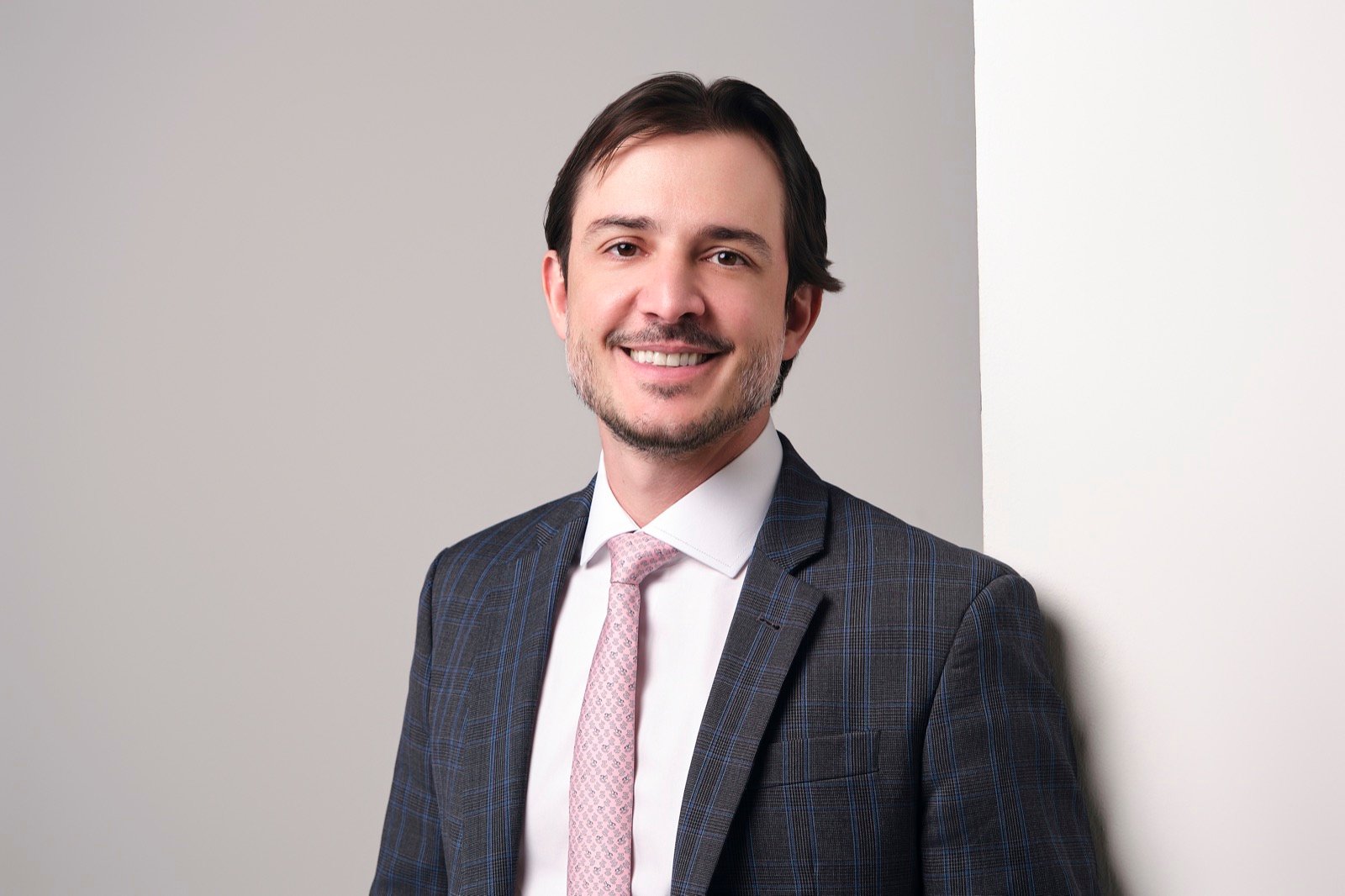
Otolaryngologist and facial plastic surgeon · CRM-PR 33.018 · RQE 17.984. PhD from FMRP-USP, founder of the Sella Learning Center. Updated on 2026-10-07.
Frequently asked questions
Can rhinoplasty make a thick-skinned tip look refined?
It can look more defined and better balanced, but definition in thick skin comes from the cartilage framework underneath, not from the skin itself. The degree of refinement possible is estimated during the consultation with photographs, simulation and ultrasound measurement of skin thickness.
Is skin thinning part of the surgery?
In selected cases, part of the fibrofatty layer in the supratip is thinned conservatively. Aggressive thinning risks contour irregularities and vascular problems, so it is used as a complement to structural work and never as the main strategy.
How long until I see the final result with thick skin?
Most patients see a clear shape within three to six months, with tip definition continuing to emerge up to 12 to 18 months. Revision, when indicated, is only considered after 12 months.
Why does the nose look wide and the tip undefined in the first weeks?
Because edema and early scar tissue accumulate in the soft tissue envelope, and a thick envelope retains them longer. Head elevation, ice in the first two weeks and taping as instructed help the skin adapt to the new framework.
Does ultrasound before surgery really change the plan?
Yes, it can. High-frequency ultrasound measures real skin thickness, identifies previous fillers and grafts and assesses columellar vascularity, which influences how much thinning is safe and how much structural grafting will be needed.
Is rib cartilage always necessary in thick skin?
No. Septal cartilage is the first choice, with ear cartilage for softer contours. Rib is considered when the septum is insufficient, in revision surgery or when strong projection is required against a heavy soft tissue envelope.
Book a consultation with Dr. Guilherme Sella
In person in Maringá, Brazil, or by video consultation. English-speaking team.