

Coming home to Brazil for your rhinoplasty.
Most Brazilians living in the United States, Europe, Japan or Australia can fit surgery inside a normal holiday trip home. The key is a teleconsultation months ahead and about seven days in Maringa after the operation.
Yes. Brazilians living abroad can plan a rhinoplasty in Brazil within a single trip, usually 10 to 14 days on the ground. The sequence is a teleconsultation weeks or months before you fly, preoperative tests done in your country of residence or on arrival, surgery in Maringa, and cast removal around day 7, when flying is normally released. Follow-ups at 1, 3, 6 and 12 months can be done online. Bring passport or Brazilian ID, CPF, previous imaging and a list of medications. The team of Dr. Guilherme Sella works in Portuguese, English and Spanish.
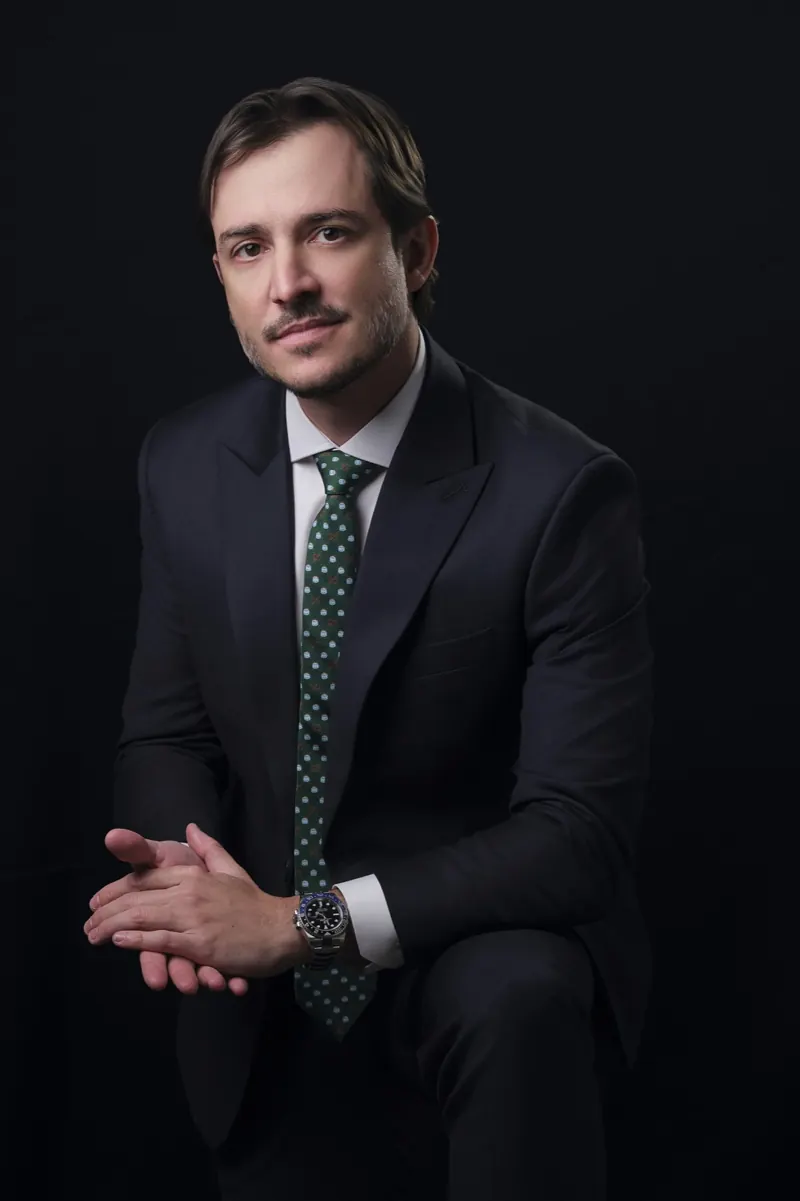
Why Brazilians abroad come home to operate
If you moved to Boston, Lisbon, Nagoya or Dublin, you already know the routine. Vacation in Brazil means family, paperwork, the dentist, the dermatologist. Rhinoplasty fits the same logic. You speak the language of the surgeon, you have relatives who can host you during the first week, and the trip was going to happen anyway.
There is also a structural reason. Brazil has a long tradition in facial surgery, with a school built around Ivo Pitanguy, and appears consistently among the countries with the highest volume of aesthetic procedures in surveys published by ISAPS. Medicine is regulated by the Conselho Federal de Medicina, and specialist registration, the RQE, can be checked publicly on the state medical board website. For rhinoplasty, that last point matters more than any marketing. Dr. Guilherme Sella holds CRM-PR 33.018 and RQE 17.984 in Otorhinolaryngology, a direct doctorate from HCFMRP-USP and certification by the European Board in Facial Plastic and Reconstructive Surgery.
Cost is usually part of the decision as well. Surgery in Brazil tends to be more affordable than in the United States or Western Europe because of differences in professional fees, hospital structure and exchange rate. No figures are published online. The quote is given after the consultation, because it depends on technique, surgical time and whether grafts are needed.
Can it be done during a normal vacation?
In most cases, yes. Plan on roughly 10 to 14 days in Brazil, with about 7 of those days after the surgery. The cast comes off around day 7, and flying is generally released after that.
| Stage | When | What happens |
|---|---|---|
| Teleconsultation | 1 to 6 months before | Photos, history, technique discussion, digital simulation, date reserved |
| Preoperative tests | 2 to 4 weeks before | Blood work, cardiology clearance when indicated, done in your country or in Brazil |
| Arrival in Maringa | 1 to 2 days before surgery | In-person exam, nasal endoscopy, standardized photos, nasal ultrasound when indicated |
| Surgery day | Day 0 | General anesthesia, 3 to 5 hours, 12 to 24 hours of hospital stay |
| First week | Days 1 to 7 | Rest, ice, head elevated, saline rinses, bruising peaks and fades |
| Cast removal | Around day 7 | External aquaplast plate removed, taping for one more week, flying released |
| Return home | Day 8 to 14 | Travel with taping in place, swelling still present |
Revision cases and operations combined with a facelift or chin surgery may need a longer stay. That is defined individually in the consultation.
Before you fly: the teleconsultation
The process starts online. A teleconsultation covers your history, what bothers you about your nose, breathing complaints, previous surgeries, fillers and medications. You send standardized photos following instructions from the team. The surgeon discusses which technique applies to your anatomy, whether dorsal preservation is an option, whether ultrasonic instruments are likely to be used, and what grafts might be necessary.
Digital simulation is part of the conversation. It is a communication tool, with roughly 60 to 70 percent similarity to the final result, never a contract. The definitive shape of a nose appears between 6 and 12 months, and up to 18 months in thick skin or in revision surgery.
The full in-person consultation still happens when you arrive. It lasts around one hour and includes internal examination of the nose, photographs and, when indicated, high-frequency dermatologic ultrasound to assess skin thickness, previous fillers, old grafts and columellar vascularization.
Documents and paperwork checklist
Bring more than you think you need. It is easier to carry documents than to request them from abroad later.
- Valid passport, and your Brazilian ID or CPF if you still hold them
- Health insurance card from your country of residence, plus travel insurance details
- Previous operative reports if you have had nasal surgery, in the original language
- Previous CT scans or images on a disc or in digital format
- Recent blood work and any cardiology report
- Complete list of medications, including contraceptives, antidepressants, supplements and anabolic agents
- Allergy history, especially to anesthetics, antibiotics and anti-inflammatories
- Contact of a relative or companion who will stay with you in the first week
Care in Brazil is provided on a private basis. No Brazilian insurance plans are accepted. The clinic issues documentation that you can submit to your insurer abroad for possible reimbursement, including the functional portion of the operation such as septoplasty, turbinate surgery or endoscopic sinus surgery. Reports can be issued in English or Spanish on request. Whether your insurer reimburses anything depends entirely on your policy.
What the week in Maringa looks like
Surgery is performed at Saine Health Complex, a boutique hospital in Maringa with 11 operating rooms, adult and neonatal ICU and intensivists on site around the clock. Admission lasts 12 to 24 hours.
Expect light bleeding for 48 to 72 hours, periorbital bruising that can last up to 15 days, and occasional fever up to 38 degrees Celsius in the first two days. Most patients leave without nasal packing. A silicone internal splint is used in selected cases for about 10 days. Numbness of the upper lip and front teeth can persist for up to 3 months.
During that week, keep the head elevated at 30 degrees, use ice in the first two weeks, rinse with saline and never blow your nose. Glasses are avoided for 4 weeks. Exercise resumes after 15 days. Sun, beach and pool only after one month, with SPF 30 for 3 months.
Maringa is served by MGF airport, with direct flights from Sao Paulo and Curitiba, and is accessible by road from the interior of Sao Paulo, Mato Grosso do Sul and Paraguay. The team can suggest hotels near the clinic and recommends having a companion during the first week.
Flying home and follow-up at a distance
After cast removal the nose stays taped for one more week. You can travel with the tape in place. Cabin pressure is not a problem once the external plate is off, but long-haul flights increase swelling, so hydration and an aisle seat help.
Follow-ups are scheduled at 1, 3, 6 and 12 months. Expatriate patients usually do them by video, sending photos in the same standardized angles. If a second trip to Brazil is possible around the sixth month, it is welcome, though not mandatory. Revision rates in the literature range from 5 to 15 percent, and any revision is only considered after 12 months. The approach to secondary rhinoplasty is discussed openly before the first surgery, not after.
More details on logistics, language support and documentation are available on the page for international patients, and the technical overview of the procedure is on the rhinoplasty page.
When to see Dr. Sella
Book a teleconsultation if you live abroad, are considering surgery on your next trip to Brazil, and want to understand which technique applies to your nose, how much time off you will need and what documentation your insurer may accept. Indication, risks and the surgical plan are individual and defined only after a complete evaluation.

Otolaryngologist and facial plastic surgeon · CRM-PR 33.018 · RQE 17.984. PhD from FMRP-USP, founder of the Sella Learning Center. Updated on 2026-10-15.
Frequently asked questions
How many days do I need to stay in Brazil?
Plan on about 10 to 14 days in total, arriving one or two days before surgery and staying roughly seven days afterward until the cast is removed. Revision cases or combined facial procedures may require a longer stay.
Can I fly home with the cast on?
Flying is usually released after the external cast is removed, around day seven. You will travel with tape on the nose for another week, and long flights tend to increase swelling temporarily.
Do I need a Brazilian document to be operated on?
A valid passport is enough for identification, though bringing your CPF or Brazilian ID makes hospital registration simpler. Previous operative reports and imaging are also important if you have had nasal surgery before.
Will my insurance abroad reimburse part of the surgery?
That depends on your policy. The clinic issues invoices and medical reports, including the functional portion such as septoplasty or turbinate surgery, and can provide them in English or Spanish for you to submit to your insurer.
Can my follow-up appointments be done online?
Yes. Follow-ups at 1, 3, 6 and 12 months can be done by video with standardized photos. In-person returns in Maringa are welcome whenever you travel to Brazil again.
Is the consultation available in English?
Yes. Dr. Sella speaks Portuguese, English and Spanish, and the team communicates in all three languages, including for scheduling and postoperative instructions.
How far in advance should I book the teleconsultation if I only come to Brazil once a year?
Most patients schedule the teleconsultation one to six months before the trip, which is enough time to discuss technique, review the digital simulation and reserve a surgical date that fits your vacation window. Booking early also helps when the preoperative tests need to be organised in your country of residence. Peak periods such as December and July tend to fill first, so an earlier contact gives you more date options.
Can I do my blood tests and cardiology clearance in the country where I live?
Yes, preoperative tests can be done abroad and sent to the team in advance for review, usually two to four weeks before surgery. Bring the original reports with you, and if something needs to be repeated or completed, it can be arranged in Maringa in the days before the procedure. The exact list of tests depends on your age, health history and the planned surgical time, and is defined after the consultation.
Is a long-haul flight home one week after rhinoplasty a problem for swelling?
Flying is generally released after the cast comes off, around day seven, and cabin pressure does not damage the surgical result. You may notice that swelling looks slightly worse for a day or two after a long flight, which settles with time, hydration and walking in the aisle. Keeping the taping in place and following the saline rinse routine during travel helps.
If I need a touch-up later, do I have to come back to Brazil?
Revision rates reported in the literature range from 5 to 15 percent, and any reassessment is only made after twelve months, when the tissues have settled. Photos and an online review can tell you whether something really needs attention, so a trip is not booked blindly. If a revision is indicated, it is planned as a new procedure with its own timeline and quote, discussed in consultation.
Book a consultation with Dr. Guilherme Sella
In person in Maringá, Brazil, or by video consultation. English-speaking team.