

Rhinoplasty in Brazil for patients living in France.
A direct flight from Paris takes about eleven hours. The rest of the plan starts online, long before boarding, and continues from home after the cast comes off.
Patients living in France can plan rhinoplasty in Brazil entirely from home. The process starts with a video consultation, followed by preoperative tests done in France and reviewed before travel. Flights from Paris to São Paulo are direct and take about eleven hours, with a short domestic connection to Maringá. Most patients stay 7 to 10 days, since the external cast is removed around day 7 and flying is cleared after that. Follow-up at 1, 3, 6 and 12 months can be done online. Dr. Guilherme Sella and his team work in Portuguese, English and Spanish, and issue documents in English when requested.
Why patients living in France consider surgery in Brazil
Brazil has a long surgical tradition in facial and body plastic surgery, built around the school of Ivo Pitanguy, and it is consistently among the countries with the highest volume of aesthetic procedures in the world according to ISAPS surveys. High volume alone does not make a surgeon suitable for your nose. What it does create is a dense environment of training programs, congresses and teaching centers, which is the reason many European surgeons travel to Brazil for observation and courses.
There is also a practical factor. For someone earning in euros, the cost structure of surgery in Brazil, which combines professional fees, hospital charges and exchange rate, tends to be lower than in France or in neighboring European countries. This matters, and it is honest to say so. It should never be the main reason for the decision. The main reason should be the surgeon, the technique proposed for your anatomy and the quality of the hospital.
How to verify a Brazilian surgeon's credentials from France
Medicine in Brazil is regulated by the Conselho Federal de Medicina. Every physician has a CRM registration number, and specialists hold an RQE, a registered specialist qualification linked to a recognized board. Both can be checked online on the regional medical council website, from anywhere in the world.
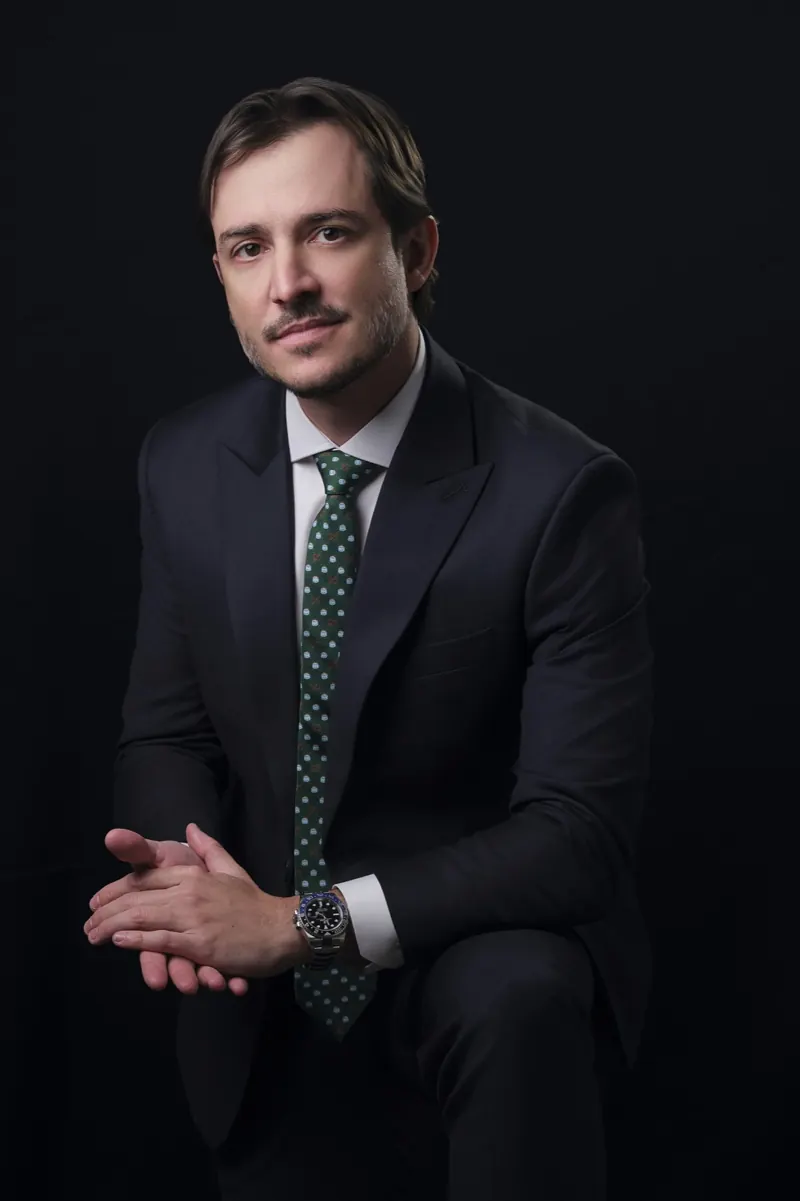
For reference, Dr. Guilherme Sella holds CRM-PR 33.018 and RQE 17.984 in Otorhinolaryngology. His training includes residency at the Hospital das Clínicas of Ribeirão Preto Medical School, University of São Paulo, a doctorate completed at the same institution in 2018 on morphophysiology of facial structures, a rhinoplasty fellowship in Melbourne and Sydney, and certification by the European Board in Facial Plastic and Reconstructive Surgery. He has six indexed articles on PubMed, including papers on dorsal preservation rhinoplasty published in Facial Plastic Surgery Clinics of North America. You can read the full background on the page about Dr. Guilherme Sella.
A practical checklist before you book anything:
- Confirm the CRM and RQE numbers on the state medical council website.
- Look for indexed publications, not only social media content.
- Ask which hospital will be used and whether it has an adult ICU.
- Ask whether the surgeon treats the functional side of the nose, not only the external shape.
- Ask who performs the surgery and who follows you afterward.
The first step: a video consultation from Paris
The first appointment is a full consultation, not a quick sales call. It lasts around one hour and covers your history, what bothers you about your nose, breathing complaints, previous surgeries or fillers, photographs in standardized views and a digital simulation. The simulation is a communication tool. It usually reproduces something in the range of 60 to 70 percent of the final result, and it exists to align expectations, not to promise an outcome.
The time difference between Paris and Maringá is four or five hours depending on daylight saving. A late morning in Brazil is mid afternoon in France, which makes scheduling straightforward for most working patients. The consultation can be held in English, Spanish or Portuguese.
If you are considering dorsal preservation rhinoplasty or ultrasonic rhinoplasty, this is the moment to discuss whether your anatomy fits those techniques. The choice is individual and is only defined after physical examination, which includes internal examination of the nose and, when indicated, high frequency dermatological ultrasound of the nasal skin.
Tests and preparation you complete in France
Preoperative tests are done in your own city, with your own laboratory, and sent by email for review. Typically this includes blood work, a cardiology assessment when age or history justifies it, and any imaging requested after the video consultation. If you take medication, use anticoagulants, smoke or have a history of allergies, that is discussed in advance.
Two points matter for patients flying long distances. First, hydration and mobility during the flight, which reduce thrombotic risk. Second, arriving with enough margin before surgery. The recommendation is to land one to two days before the procedure, so that the in person consultation, final photographs and any additional examination can be done without rushing.
Flights and how long you stay in Maringá
Paris to São Paulo is a direct flight of roughly eleven hours, operated daily by several carriers into Guarulhos. From there, a domestic connection of about one hour and twenty minutes reaches Maringá airport, code MGF, which also receives flights from Congonhas and Curitiba. Total door to door travel is usually under twenty hours.
Surgery is performed under general anesthesia, lasts three to five hours in primary cases and longer in revisions, with an inpatient stay of 12 to 24 hours at Saine Health Complex, a boutique hospital in Maringá with 11 operating rooms, adult and neonatal ICU and intensivists on site around the clock.
| Day | What happens |
|---|---|
| Day 0 | Arrival in Maringá, rest |
| Day 1 | In person consultation, examination, final photographs, preoperative review |
| Day 2 | Surgery, overnight hospital stay |
| Day 3 | Discharge, first dressing check, instructions |
| Days 4 to 6 | Rest, ice, head elevated at 30 degrees, saline irrigation |
| Day 7 | Removal of the external cast, taping applied, clearance to fly |
| Days 8 to 10 | Optional extra days before the long flight |
Most patients plan 7 to 10 days in the city. A companion is recommended for the first week. The team can suggest accommodation close to the clinic, which is located on Avenida Cidade de Leiria, in Zona 01, with partner parking next door.
Follow-up after you return to France
Flying home is cleared after the cast is removed. Taping continues for about one more week, glasses are avoided for four weeks, exercise restarts after fifteen days, and sun exposure, beach and pool wait one month, with SPF 30 for three months. Mild bleeding in the first 48 to 72 hours and periorbital bruising for up to fifteen days are expected parts of recovery.
Follow-up appointments at 1, 3, 6 and 12 months can be done by video from France, with photographs sent in the same standardized views. Definitive results appear between 6 and 12 months, and up to 18 months in thick skin or revision cases. If you ever need a second opinion about an unsatisfactory result, that discussion belongs to revision rhinoplasty, where international literature reports revision rates in the range of 5 to 15 percent and reoperation is generally considered only after twelve months.
Costs, documents and reimbursement
Practice is private, without Brazilian health insurance contracts. The surgical estimate is only issued after the consultation, because it depends on the technique, operating time and the grafts required. It includes the surgical team, hospital, anesthesia and the scheduled follow-up visits. No figure is quoted before a proper evaluation, and no figure is published online.
The clinic issues documentation in English or Spanish on request, including surgical reports and invoices that patients may submit to private insurers or mutuelles. This applies to the functional portion of the procedure as well, such as septoplasty, turbinate surgery or sinus surgery, when it is part of the operation. Reimbursement rules depend entirely on your own policy in France.
More logistical details for travelers are gathered on the international patients page, and the overview of techniques is available under rhinoplasty.
When to contact Dr. Sella
The right moment is when you can describe what bothers you and you are ready to hear an honest assessment, including the possibility that surgery is not indicated, or that a different approach than the one you imagined fits your anatomy better. Indication, risks and the surgical plan are always individual and defined in consultation. To schedule a video appointment from France, use the contact page or the team's WhatsApp line.

Otolaryngologist and facial plastic surgeon · CRM-PR 33.018 · RQE 17.984. PhD from FMRP-USP, founder of the Sella Learning Center. Updated on 2026-10-15.
Frequently asked questions
How long do I need to stay in Brazil for rhinoplasty?
Most patients from Europe plan 7 to 10 days in Maringá. The external cast is removed around day 7, and flying is cleared after that, with taping continuing for about one more week.
Can the first consultation be done online from Paris?
Yes. The first appointment is a full video consultation of about one hour, including history, photographs and digital simulation. An in person examination is still performed one to two days before surgery.
Are there direct flights from France to Brazil?
Paris to São Paulo is a direct flight of roughly eleven hours, with daily options. From São Paulo there is a domestic connection of about one hour and twenty minutes to Maringá airport, code MGF.
How can I verify the surgeon's qualifications from France?
Brazilian physicians have a CRM registration and specialists hold an RQE, both verifiable on the state medical council website. Dr. Sella holds CRM-PR 33.018 and RQE 17.984 in Otorhinolaryngology.
Will I receive documents in English for my insurer?
The clinic issues surgical reports and invoices in English or Spanish on request, including the functional part of the procedure. Whether your policy reimburses anything depends on your own insurer in France.
Who follows my recovery after I return home?
Follow-up at 1, 3, 6 and 12 months is done by video with the surgical team, using standardized photographs. The team remains available by WhatsApp for questions during the early recovery period.
Can I have my preoperative tests done in France instead of Brazil?
Yes. Blood work, cardiac clearance and any imaging requested can be done near your home in France and sent to the team for review before you travel. If something needs to be repeated or completed, it is identified in advance rather than on arrival. The list of tests is defined after the video consultation, since it depends on your age, health history and the technique planned.
How do I get from São Paulo to Maringá after a long-haul flight?
Maringá has its own airport, MGF, with domestic flights connecting from Guarulhos and Congonhas in São Paulo, so the final leg is short. Many patients from Europe land in the morning and connect the same day, while others prefer a night in São Paulo before continuing. The team usually recommends arriving one to two days before surgery to rest and complete the in person evaluation.
Should I travel with a companion for rhinoplasty abroad?
A companion is recommended for the first week, especially for patients coming from abroad who are not familiar with the city. The first days involve swelling, head elevation and limited activity, and having someone to help with meals, transport and medication makes the period easier. If travelling alone is the only option, tell the team in advance so the logistics and accommodation can be organised accordingly.
What happens if I need a revision after returning to France?
Revision rates reported in the rhinoplasty literature range from about 5 to 15 percent, and any decision is only considered after twelve months, when swelling has settled. Photographs and online follow up at 1, 3, 6 and 12 months allow the healing to be assessed from a distance. If a revision is discussed, it is planned as a new procedure with its own schedule, which means another trip to Maringá.
Book a consultation with Dr. Guilherme Sella
In person in Maringá, Brazil, or by video consultation. English-speaking team.