

Rhinoplasty in Brazil for patients living in Germany.
From the first video call to the day your cast comes off, here is the realistic timeline for traveling from Frankfurt, Munich or Berlin to Maringá for nasal surgery, and what stays under your care at home.
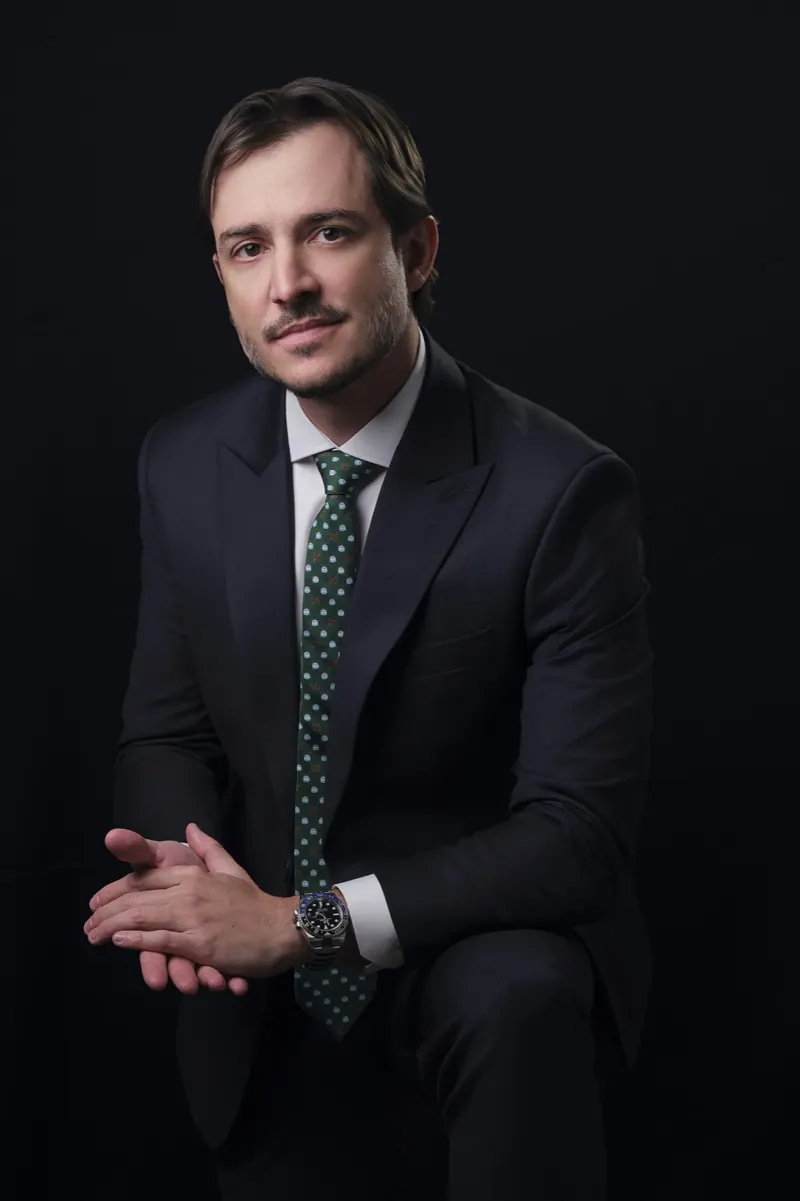
Patients living in Germany can have rhinoplasty in Brazil through a structured remote pathway: a one hour video consultation with photos and digital simulation, preoperative tests done in Germany and reviewed before travel, then 7 to 10 days in Maringá. Surgery happens 1 to 2 days after arrival, the external cast comes off around day 7, and flying home is released after that. Follow-up at 1, 3, 6 and 12 months can be online. Dr. Guilherme Sella is an ENT surgeon with a doctorate from HCFMRP-USP and papers indexed on PubMed about dorsal preservation.
Why patients based in Germany look at Brazil
Brazil has one of the strongest surgical traditions in facial and body plastic surgery, built around the school of Ivo Pitanguy and sustained by high procedure volume reported in international surveys such as those by ISAPS. For nasal surgery, this means busy surgeons, mature training programs and constant exchange with European and North American groups.
The second reason is structural. Surgical fees, hospital costs and currency exchange combine differently in Brazil than in Germany, which is why patients earning in euros often find the total budget of a procedure more accessible. No figure is published online. The budget is only presented after the consultation, because it depends on technique, operating time and whether grafts are needed.
The third reason is specific rather than general. Dr. Sella is an otolaryngologist, so breathing and shape are assessed in the same appointment. He completed a direct doctorate in Morphophysiology of Facial Structures at HCFMRP-USP, trained in structured rhinoplasty in Melbourne and Sydney, and co-authored papers on preservation rhinoplasty in Facial Plastic Surgery Clinics of North America.
How to verify a Brazilian surgeon before you book
Medicine in Brazil is regulated by the Conselho Federal de Medicina. Every doctor has a CRM registration number, and specialists hold an RQE, the registry of specialist qualification. Both are public and searchable on the website of the state medical council.
For reference, Dr. Guilherme Constante Preis Sella holds CRM-PR 33.018 and RQE 17.984 in Otolaryngology, granted by ABORL-CCF in 2014. He is also certified by the European Board in Facial Plastic and Reconstructive Surgery, a full member of the Brazilian Academy of Facial Plastic Surgery and a founding member of the Brazilian Rhinoplasty Society.
Useful checks before any international trip:
- Confirm CRM and RQE numbers on the state council website.
- Look for indexed scientific output, not only social media content.
- Ask which hospital will be used and whether it has an adult ICU.
- Ask who performs the anesthesia and who sees you on follow-up days.
The video consultation across time zones
Brazil is normally 4 to 5 hours behind Central European Time depending on the season, so a late afternoon slot in Maringá is early evening in Germany. The video consultation lasts about one hour and covers history, breathing complaints, standardized photographs sent in advance, digital simulation, the technique being considered and the postoperative calendar.
Digital simulation is a communication tool. In practice it reflects roughly 60 to 70 percent of what the tissue will do. Skin thickness, cartilage strength and healing determine the rest, which is why the surgeon explains limits before anything is scheduled.
The internal nasal exam and, when indicated, high frequency dermatologic ultrasound of the nose are done in person on arrival. Ultrasound helps map skin thickness, previous fillers, old grafts and columellar vascularization, which matters in revision planning.
Tests and preparation done in Germany
Preoperative tests are performed near home in Frankfurt, Munich, Berlin or wherever you live, then sent for review before travel. Blood work, cardiac assessment when age or history requires it, and imaging when requested are the usual items. Medication adjustments and smoking cessation are discussed at the same stage.
If you take anticoagulants, hormones, isotretinoin or supplements with bleeding risk, mention them early. These items change the timeline more often than anything else.
Flights and reaching Maringá
Frankfurt has direct flights to São Paulo, with a flight time of about 12 hours. From Munich, Berlin, Düsseldorf or Hamburg, the usual route connects through Frankfurt, Lisbon, Madrid or Paris. From São Paulo, both GRU and CGH have short domestic flights to Maringá airport, code MGF. Curitiba is another connection option, and road access from inland São Paulo state is straightforward for patients already in Brazil.
Plan to land 1 to 2 days before surgery. That buffer absorbs delays and allows the in person exam, final photographs and preoperative orders without pressure.
Your 7 to 10 days in Brazil
| Day | What happens |
|---|---|
| Arrival, day -2 or -1 | In person exam, nasal ultrasound when indicated, review of tests, final planning |
| Day 0 | Surgery under general anesthesia, usually 3 to 5 hours, longer in revisions. Stay of 12 to 24 hours at Saine Health Complex |
| Day 1 to 3 | Rest with the head elevated at 30 degrees, ice, saline rinses. Mild bleeding for 48 to 72 hours is expected |
| Day 4 to 6 | Swelling and periorbital bruising peak and start to fade. Short walks allowed |
| Day 7 | External aquaplast cast removed, taping started for about one more week |
| Day 7 to 10 | Flight home released after cast removal |
Surgery takes place at Saine Health Complex, a boutique hospital in Maringá with 11 operating rooms, adult and neonatal ICU and intensivists on site around the clock. Most patients do not need nasal packing. A silicone internal splint is used in selected cases for about 10 days.
A companion during the first week is recommended. The team helps with accommodation suggestions near the clinic on Avenida Cidade de Leiria, in Zona 01.
Recovery after you fly home
Bruising around the eyes can last up to 15 days. Numbness of the upper lip and front teeth may persist for up to 3 months. Glasses are avoided for 4 weeks. Exercise restarts after about 15 days, sun, beach and pool after one month, with SPF 30 for 3 months. Never blow your nose in the early weeks.
Follow-up visits at 1, 3, 6 and 12 months can be done online from Germany, with in person visits whenever travel is convenient. Photographs taken under standardized conditions at home are part of that process. The definitive result appears between 6 and 12 months, and up to 18 months in thick skin or revision cases. Revision rates reported in the literature range from 5 to 15 percent, and any reassessment is only considered after 12 months.
Documents, languages and reimbursement
The clinic team communicates in Portuguese, English and Spanish, and consultations with the surgeon can be held in any of the three. Surgical reports and medical statements are issued in English or Spanish on request.
Care is private, without Brazilian insurance contracts. The clinic provides documentation so that you can request reimbursement from your own insurer, including the functional portion such as septoplasty, turbinate surgery or endoscopic sinus surgery. Whether a German private insurer accepts international claims depends on your policy, so check the terms before traveling. More detail on the full pathway is available on the page for international patients.
When to contact Dr. Sella
If you live in Germany and are weighing rhinoplasty for breathing, for shape or for both, the first step is a video consultation. Indication, technique, risks and timeline are individual and are only defined after the full assessment. The patient team can be reached on WhatsApp at +55 44 99121-2021.

Otolaryngologist and facial plastic surgeon · CRM-PR 33.018 · RQE 17.984. PhD from FMRP-USP, founder of the Sella Learning Center. Updated on 2026-10-15.
Frequently asked questions
How long do I need to stay in Brazil for rhinoplasty?
Plan for 7 to 10 days in Maringá. You arrive 1 to 2 days before surgery and the external cast is removed around day 7, when flying home is released.
Can the whole consultation be done online from Germany?
Yes. The initial one hour consultation with history, photographs, digital simulation and technique discussion is done by video. The internal nasal exam and nasal ultrasound are performed in person on arrival in Maringá.
Where do I do my preoperative tests?
Tests are done near your home in Germany and sent for review before travel. Blood work, cardiac assessment when indicated and any requested imaging are the usual items.
Is it safe to fly 12 hours after nasal surgery?
Flying is released after the external cast is removed, usually around day 7. Hydration, moving in the cabin and saline rinses during the flight are recommended, and the team gives written instructions before departure.
Can I get reimbursement from my German insurance?
The clinic issues documentation in English, including for functional procedures such as septoplasty and turbinate surgery, so you can file a claim. Acceptance depends entirely on the terms of your own policy.
How can I verify the surgeon's credentials from abroad?
Brazilian doctors have a public CRM registration and specialists hold an RQE, both searchable on the state medical council website. Dr. Sella holds CRM-PR 33.018 and RQE 17.984 in Otolaryngology.
What happens if I have a complication after I return to Germany?
Minor issues such as crusting, mild swelling asymmetry or a stitch reaction are usually managed remotely, with photos and a video call with the team. If something needs hands-on care, the team can guide you to a local ENT or facial plastic surgeon and send a detailed surgical report in English describing the technique and any grafts used. Revision surgery, when indicated, is only discussed after 12 months, and the plan is always defined in consultation.
Do I need someone to travel with me to Maringá?
A companion is recommended for the first week, mainly for the hospital discharge, the first days at the hotel and the cast removal appointment. If you travel alone, the team adjusts the schedule and keeps closer contact by WhatsApp during that period. Hospitality options near the clinic are suggested by the team once your dates are confirmed.
Can breathing problems be treated in the same surgery as the aesthetic part?
Yes. Because Dr. Sella is an ENT surgeon, septoplasty, turbinate reduction and nasal valve correction can be performed in the same procedure as the aesthetic work, when there is a functional indication. The internal nasal examination and your history during the video consultation help define whether this applies, and the final decision is made after the in person examination in Maringá.
How do I get to Maringá from a German airport?
Most patients fly into São Paulo, either Guarulhos or Congonhas, and take a domestic connection to Maringá airport, code MGF, which also has direct flights from Curitiba. The total journey usually takes one travel day, so arriving one to two days before surgery allows time to rest and complete the in person assessment. The team sends a suggested itinerary once your surgical date is set.
Book a consultation with Dr. Guilherme Sella
In person in Maringá, Brazil, or by video consultation. English-speaking team.