

Rhinoplasty in Brazil for patients from Scandinavia.
Living in Stockholm, Copenhagen or Oslo and considering nasal surgery in Brazil? This guide covers credentials you can verify, the online consultation, flight routes, how long you stay in Maringá and follow-up from home.
Patients living in Scandinavia can plan rhinoplasty in Brazil through a structured remote pathway. It starts with a video consultation of about one hour, with standardized photos, digital simulation and a technique plan. Blood tests and cardiac clearance are done at home and sent in English. Travel usually goes through a European hub such as Lisbon, Amsterdam or Frankfurt to São Paulo, then a domestic flight to Maringá. Plan 7 to 10 days in Brazil: arrival, in person exam, surgery with a 12 to 24 hour hospital stay, cast removal around day 7, then the flight home. Follow-up with Dr. Guilherme Sella continues online at 1, 3, 6 and 12 months.
Why patients in Scandinavia look at Brazil for rhinoplasty
Brazil has one of the strongest traditions in plastic surgery, shaped by the school of Ivo Pitanguy, and appears consistently among the countries with the highest volume of aesthetic procedures in the world in ISAPS surveys. Volume matters for a practical reason. Surgeons who operate on noses every week encounter more anatomical variations, more thick skin, more crooked noses and more revision cases in one year than many colleagues see in a decade.
Cost structure is the second question patients from Northern Europe ask. Surgical fees, hospital charges and anesthesia in Brazil are priced in local currency, and the exchange rate against the krona, the euro and the pound tends to work in favor of someone earning abroad. No figures are published online. A surgical estimate is issued only after the consultation, because it depends on the technique, the operating time and whether cartilage grafts are needed. When issued, it covers the surgical team, the hospital, anesthesia and postoperative visits.
The third reason is simply choice. Aesthetic nasal surgery is private in Sweden, Denmark and Norway as it is everywhere else. Once you are paying privately, the real question becomes who operates, with which technique, and how much time that surgeon spends planning your case.
How to verify a Brazilian surgeon from Stockholm, Copenhagen or Oslo
Medicine in Brazil is regulated by the Conselho Federal de Medicina. Every physician holds a state registration number, and specialists hold an RQE, a registered specialty qualification that anyone can check on the regional council website before booking a flight.
What can be checked about Dr. Guilherme Sella:
- CRM-PR 33.018 and RQE 17.984, specialist title in Otorhinolaryngology by ABORL-CCF since 2014
- Residency at HCFMRP-USP and a direct doctorate in Morphophysiology of Facial Structures completed in 2018 at the same institution
- Fellowship in structured rhinoplasty in Melbourne and Sydney
- Certification by the European Board in Facial Plastic and Reconstructive Surgery
- Six indexed articles on PubMed, three of them on dorsal preservation rhinoplasty, under ORCID 0000-0001-9761-695X
- Full member of ABORL-CCF and of the Brazilian Academy of Facial Plastic Surgery, founding member of the Brazilian Society of Rhinoplasty
- Teaching activity through the Sella Learning Center and invited lectures in more than ten countries
For patients used to European standards of documentation, those items are verifiable without leaving home.
The video consultation across time zones
Maringá runs on UTC-3. Central European Time is 4 to 5 hours ahead depending on daylight saving, so a late morning slot in Brazil lands in the afternoon in Stockholm, Copenhagen or Oslo. Appointments are scheduled around that window.
The online consultation lasts about one hour. It includes your history, a detailed discussion of what bothers you aesthetically and functionally, standardized photographs, digital simulation and an explanation of the technique under consideration, whether that is preservation rhinoplasty, ultrasonic work on the nasal bones or a structured approach with septal, ear or rib grafts. The simulation is a communication tool and usually carries 60 to 70 percent similarity to the final result.
One part cannot be done remotely. The internal examination of the nose, covering septum, turbinates and nasal valves, is performed in person on arrival, and the surgical plan is confirmed at that point. High frequency dermatologic ultrasound of the nose is also done in Maringá when indicated, to measure skin thickness, map previous fillers or grafts and check columellar vascularization. Indication, risks and plan are always individual and defined in consultation.
Tests and preparation done at home
Blood work, ECG and cardiology clearance when age or medical history requires are done in your own city, with your own doctors. Results in English are accepted and should be sent in advance for review.
Before traveling:
- Stop smoking and vaping as early as possible.
- List all medications and supplements, including anticoagulants and anti-inflammatories, for review.
- Arrange a companion for the first week, which is strongly recommended.
- Book a return ticket with flexibility, since the cast comes off around day 7.
- Arrive 1 to 2 days before surgery to rest and adjust to the time change.
Flights and the route to Maringá
From Stockholm Arlanda, Copenhagen Kastrup or Oslo Gardermoen, the usual routing is a European hub such as Lisbon, Amsterdam or Frankfurt, then an overnight transatlantic flight to São Paulo Guarulhos, then a short domestic flight to Maringá airport, code MGF. Curitiba works as an alternative connection. Total door to door time is typically 18 to 22 hours, and the clinic team helps with hotel options close to the clinic and the hospital. More detail on the process is available on the international patients page.
How long you stay: day by day
| Stage | What happens |
|---|---|
| Day -2 to -1 | Arrival in Maringá, rest, adjustment to the time zone |
| Day 0 | In person consultation, internal nasal exam, ultrasound when indicated, photos, final plan, preoperative check |
| Surgery day | General anesthesia in most cases, 3 to 5 hours, 12 to 24 hours of hospital stay at Saine Health Complex |
| Days 1 to 3 | Swelling peaks, light bleeding is expected, head elevated at 30 degrees, ice, saline irrigation |
| Days 4 to 6 | Office review, short walks allowed, periorbital bruising starts to fade |
| Day 7 | Cast removal, taping for one more week, clearance to fly |
| Days 8 to 10 | Optional buffer for travel flexibility and a final review |
Most patients from Europe plan 7 to 10 days in Brazil. Flying home after cast removal is the standard, with taping continued for about one more week.
After you fly home: remote follow-up
Follow-up visits are scheduled at 1, 3, 6 and 12 months, in person or online. The practical rules travel with you: no glasses resting on the nose for 4 weeks, exercise after 15 days, no sun, beach or pool for a month, SPF 30 for 3 months, never blow your nose, saline irrigation as instructed.
Bruising around the eyes can last up to 15 days. Numbness of the upper lip and front teeth can persist for up to 3 months. The definitive result appears between 6 and 12 months, and up to 18 months in thick skin or in revision cases. Published revision rates in the rhinoplasty literature sit in the range of 5 to 15 percent, and any revision discussion only begins after 12 months of healing. Photos sent from home at each milestone allow the surgeon to track swelling and skin behavior between appointments.
Documents, language and insurance reimbursement
The team works in Portuguese, English and Spanish. Documentation is issued in English or Spanish on request, including the surgical report and the description of functional procedures such as septoplasty, turbinoplasty or endoscopic sinus surgery, which some insurers abroad consider for partial reimbursement. The practice is private and does not contract with health plans, and surgical payments can be arranged in installments. General information about techniques is available on the rhinoplasty page.
When to contact Dr. Sella
If you live in Scandinavia and want to understand whether your nose is better suited to preservation, ultrasonic or structured techniques, and what a realistic timeline in Brazil would look like, the first step is a video consultation. Nothing is scheduled before that conversation. You can reach the team through the contact page and ask for an appointment slot that fits Central European hours.

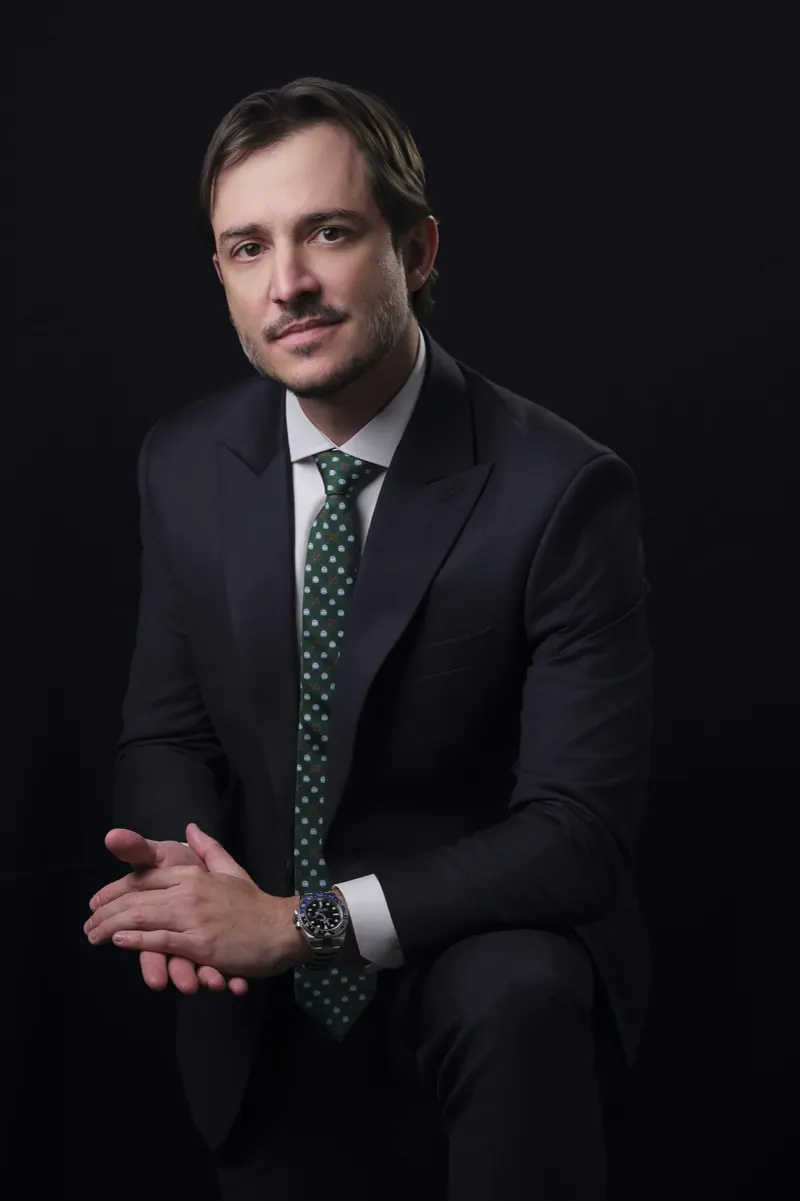
Otolaryngologist and facial plastic surgeon · CRM-PR 33.018 · RQE 17.984. PhD from FMRP-USP, founder of the Sella Learning Center. Updated on 2026-10-15.
Frequently asked questions
How many days do I need to stay in Brazil for rhinoplasty?
Plan 7 to 10 days in Maringá. You arrive 1 to 2 days before surgery, stay 12 to 24 hours in hospital, and the external cast is removed around day 7, which is when flying home is usually cleared.
Can the whole evaluation be done by video from Sweden, Denmark or Norway?
Most of it can. History, photographs, digital simulation and the technique discussion happen online in a consultation of about one hour. The internal nasal examination and nasal ultrasound are done in person on arrival, before the plan is confirmed.
Do I need tests from a Brazilian laboratory?
No. Blood work, ECG and cardiology clearance when indicated are done in your own city and sent in advance. Results in English are accepted.
How do I check the surgeon's credentials from abroad?
Brazilian medicine is regulated by the Conselho Federal de Medicina, and every specialist holds an RQE that can be verified on the regional council website. Dr. Sella holds CRM-PR 33.018 and RQE 17.984, plus a doctorate from HCFMRP-USP and indexed publications on PubMed.
Will my insurance in Scandinavia reimburse part of the surgery?
That depends entirely on your policy. The clinic issues documentation in English, including the surgical report and the description of functional procedures such as septoplasty or turbinoplasty, so you can submit a reimbursement claim where your insurer allows it.
How are follow-up appointments handled after I return home?
Follow-up is scheduled at 1, 3, 6 and 12 months and can be done online with photos sent from home, or in person if you travel back. The definitive result appears between 6 and 12 months.
Is it safe to fly back to Scandinavia one week after rhinoplasty?
Flying is usually cleared after the external cast is removed, around day seven, once the in person check shows normal healing. Long flights through a European hub are tolerated well when you keep hydrated, walk in the cabin and avoid blowing your nose. Saline spray and prescribed medication should travel in your hand luggage. The exact date for your flight is confirmed by Dr. Sella at the cast removal visit in Maringa.
How do I get from Sao Paulo to Maringa?
After landing at Guarulhos, you take a domestic flight to Maringa airport, which has direct connections from Sao Paulo and Curitiba. The transfer is short and the team can help you plan the connection times so you arrive one to two days before surgery. Hotels near the clinic are suggested by the team, and the hospital, Saine Health Complex, is also in the city.
Will the consultation and documents be in English?
The team attends patients in Portuguese, English and Spanish, and the video consultation is conducted in the language you prefer. Surgical reports, prescriptions and postoperative instructions can be issued in English or Spanish on request. That documentation is also what you use if you intend to request any reimbursement at home.
Does the cold Nordic climate affect healing after rhinoplasty?
Cold, dry indoor air can make the nasal lining feel tighter and crustier in the first weeks, which is managed with regular saline irrigation and the moisturizing routine given to you. Sun exposure is a bigger issue than cold, so sunscreen with SPF 30 is recommended for three months even in winter light. Swelling behaves the same way in any climate and settles over six to twelve months. Specific guidance for your routine is given during follow-up.
Book a consultation with Dr. Guilherme Sella
In person in Maringá, Brazil, or by video consultation. English-speaking team.