

Rhinoplasty in Brazil, planned from Dubai or Abu Dhabi.
A practical guide for residents of the United Arab Emirates who are considering nasal surgery abroad: what the online consultation covers, how long you stay in Brazil and how follow-up works once you fly home.
Patients living in the United Arab Emirates can plan rhinoplasty in Brazil almost entirely from home. The process starts with a video consultation with Dr. Guilherme Sella, who reviews your history, photographs and goals and explains the proposed technique. Preoperative tests are done in Dubai or Abu Dhabi and sent for review. Direct flights connect the Emirates to São Paulo in roughly 15 hours, with a short domestic leg to Maringá. Plan 7 to 10 days in Brazil, with the external splint removed around day 7, and follow-up at 1, 3, 6 and 12 months in person or online. Indication and risks are always defined individually in consultation.
Why patients from the Emirates look at Brazil
Brazil has one of the strongest surgical traditions in facial and plastic surgery, built on decades of academic training and high case volume, and it appears consistently among the countries with the largest number of aesthetic procedures worldwide in ISAPS surveys. For someone living in Dubai or Abu Dhabi, three things usually matter more than tradition alone.
First, regulation. Medicine in Brazil is regulated by the Federal Council of Medicine. Every specialist holds a registration number and a specialist title number that can be checked online, so credentials are verifiable before you book anything.
Second, cost structure. Surgical fees, hospital costs and exchange rates in Brazil usually place the total below what the same complexity of surgery costs in the United States, Western Europe or the Gulf. No figures are quoted here, and no quote is given before a consultation, because the plan depends on technique, operating time and whether grafts are needed.
Third, continuity. A long trip only makes sense if the surgeon who plans your case is the one who operates and the one who follows you afterward.
Who performs the surgery
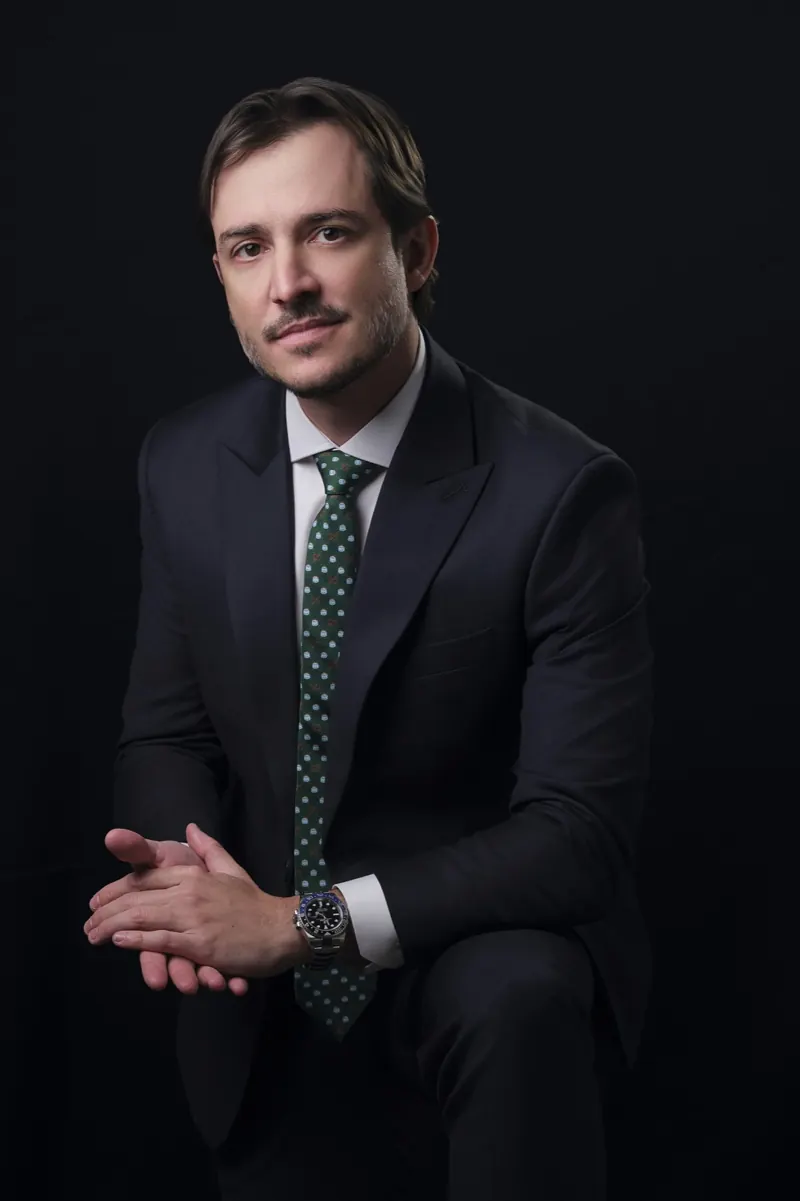
Dr. Guilherme Sella is an ENT surgeon based in Maringá, in the south of Brazil. He trained in otolaryngology at the Hospital das Clínicas of the Ribeirão Preto Medical School, University of São Paulo, completed a direct doctorate in morphophysiology of facial structures at the same institution in 2018, and did a fellowship in structural rhinoplasty in Melbourne and Sydney. He is certified by the European Board in Facial Plastic and Reconstructive Surgery and has published on dorsal preservation rhinoplasty in Facial Plastic Surgery Clinics of North America and Facial Plastic Surgery.
Because he is an ENT surgeon, breathing is assessed in the same consultation as appearance. Septum, turbinates and nasal valves are part of the plan, not an afterthought. More about his background is on the surgeon's page, and the surgical approach is described in rhinoplasty and preservation rhinoplasty.
Step one: the video consultation across time zones
The Emirates are seven hours ahead of Brazil for most of the year. Appointments are scheduled so that the call falls in the evening in Dubai or Abu Dhabi and in the afternoon in Maringá.
The teleconsultation lasts around one hour and covers:
- your medical history, previous nasal surgery, trauma, allergies and medications
- breathing complaints, since many patients notice obstruction only after it is explained
- standardized photographs taken according to instructions sent beforehand
- digital simulation, used as a direction of travel and not a contract; it typically resembles the final result by about 60 to 70 percent
- the technique being considered, from dorsal preservation to ultrasonic rhinoplasty or structural grafting
- the postoperative timeline and what you can and cannot do during your stay
If you have had previous surgery or fillers, the case may require a high frequency dermatologic ultrasound of the nose. That exam is performed in the clinic in Maringá before surgery and can change the plan, which is one reason revision cases are reviewed carefully before travel is booked.
Tests and preparation done at home
Preoperative tests are performed in the Emirates and sent by email. Laboratories in Dubai and Abu Dhabi issue reports in English, which simplifies review. Typical requests include blood work, coagulation profile and a cardiology clearance depending on age and history. A CT scan of the sinuses may be requested when there is obstruction, chronic rhinosinusitis or previous trauma.
Anything that is specific to Brazilian protocols is organized by the team before you land. Documents for your records, for your employer or for an insurance reimbursement request can be issued in English or Spanish on request.
Flights and the route to Maringá
Direct flights connect Dubai and Abu Dhabi to São Paulo in roughly fifteen hours. From São Paulo there is a domestic leg of about one hour and twenty minutes to Maringá airport, code MGF, which also receives flights from Curitiba. Many patients prefer to spend one night in São Paulo after the long haul and fly to Maringá the next morning.
Arrive one to two days before surgery. That allows time for the in person consultation, the nasal ultrasound when indicated, final tests and rest after a long flight.
What the stay looks like, day by day
| Day | What happens |
|---|---|
| Day 1 to 2 | Arrival, in person evaluation, photographs, ultrasound if indicated, preoperative review |
| Day 3 | Surgery under general anesthesia, usually 3 to 5 hours, longer in revisions; 12 to 24 hours of hospital stay |
| Day 4 | Discharge, rest, head elevated 30 degrees, ice, saline irrigation |
| Day 5 to 6 | Swelling and periorbital bruising peak and begin to fade; short walks allowed |
| Day 7 | External aquaplast splint removed, taping applied for one more week; internal silicone splint removed around day 10 when used |
| Day 8 to 10 | Final review, instructions for the flight, departure |
Surgery is performed at Saine Health Complex, a boutique hospital in Maringá with eleven operating rooms, adult and neonatal intensive care and intensivists on site around the clock. Most patients do not need nasal packing. Light bleeding for 48 to 72 hours is expected, and bruising can take up to fifteen days to disappear completely.
Flying home is released after the splint is removed, which is why a stay of seven to ten days is recommended rather than four or five. A companion during the first week is strongly advised.
Follow-up once you are back in the Gulf
Reviews are scheduled at 1, 3, 6 and 12 months. They can be done online, with photographs sent in advance, or in person if you return to Brazil. Taping instructions, sun protection with SPF 30 for three months, return to exercise after fifteen days and no glasses for four weeks are all reviewed before you leave.
The definitive result appears between six and twelve months, and up to eighteen months in thick skin or revision cases. Published series report revision rates in the range of 5 to 15 percent, and any revision is only discussed after twelve months. Full logistics for travelers are described on the international patients page.
Practical points specific to UAE residents
- Visa: Brazilian entry requirements change over time; check with the Brazilian consulate in Dubai or Abu Dhabi before booking.
- Language: the team works in Portuguese, English and Spanish.
- Timing: if you fast during Ramadan or have travel restrictions in certain months, say so in the first call so the date can be adjusted.
- Climate: Maringá is warm and sunny for most of the year, so strict sun avoidance for the first month matters.
- Payment and quotes: a budget is only issued after the consultation, and it includes surgical team, hospital, anesthesia and follow-up visits.
When to see Dr. Sella
A consultation makes sense if you are bothered by the shape of your nose, if you breathe poorly through one or both sides, if you had surgery or fillers that did not go as planned, or if you simply want a technical opinion before deciding whether to travel. The first step is a video call. Indication, technique and risks are individual and are defined only after a full evaluation. To check availability and time zones, contact the team through the contact page.

Otolaryngologist and facial plastic surgeon · CRM-PR 33.018 · RQE 17.984. PhD from FMRP-USP, founder of the Sella Learning Center. Updated on 2026-10-15.
Frequently asked questions
How long do I need to stay in Brazil for rhinoplasty?
Plan 7 to 10 days in Maringá. You arrive one to two days before surgery and fly home after the external splint is removed, which happens around day 7.
Can the whole consultation be done online from Dubai?
Yes. The initial consultation is a video call of about one hour, including photographs and digital simulation. An in person evaluation is still performed in Maringá before surgery.
Are there direct flights from the United Arab Emirates to Brazil?
Direct flights connect Dubai and Abu Dhabi to São Paulo in roughly fifteen hours, followed by a domestic flight of about one hour and twenty minutes to Maringá airport.
Will I receive documents in English for insurance reimbursement?
Reports, surgical descriptions and receipts can be issued in English or Spanish on request, including documentation of functional procedures such as septoplasty and turbinate surgery.
How are follow-up visits handled after I return home?
Reviews are scheduled at 1, 3, 6 and 12 months and can be done by video with photographs sent in advance, or in person if you return to Brazil.
Can I combine nasal breathing surgery with aesthetic rhinoplasty?
In many cases yes, since Dr. Sella is an ENT surgeon and assesses septum, turbinates and nasal valves in the same consultation. Whether both are done together is decided individually.
When is it safe to fly back to the Emirates after rhinoplasty?
The long flight home is usually cleared after the external splint is removed, around day seven. That is why most patients from Dubai or Abu Dhabi plan seven to ten days in Brazil before travelling. On the flight, keeping hydrated, walking in the aisle and avoiding blowing the nose are the main recommendations. The exact release date is confirmed by Dr. Sella at the postoperative visit.
Which preoperative tests do I need to do in Dubai or Abu Dhabi before travelling?
Blood work, coagulation tests, a cardiology assessment when indicated by age or medical history, and any imaging requested after the video consultation are usually done in your city of residence. The list is sent to you after the teleconsultation and reviewed by the team before your trip is confirmed. Results in English are accepted. If anything needs to be repeated or updated in Brazil, that can be arranged in the days before surgery.
Should I bring someone with me from the Emirates?
A companion is recommended for the first week, mainly for the hospital discharge, transport and the first days of swelling and limited activity. Patients who travel alone are also cared for, with the team available on WhatsApp throughout the stay. The clinic can suggest accommodation close to the hospital and the office in Maringá.
Do the surgeon and team speak English during the stay in Brazil?
Yes. Dr. Sella speaks Portuguese, English and Spanish, and the team communicates with international patients in these languages before, during and after the trip. Surgical reports, prescriptions and postoperative instructions can be issued in English on request. Interpreting for other languages can be arranged in advance if you prefer.
Book a consultation with Dr. Guilherme Sella
In person in Maringá, Brazil, or by video consultation. English-speaking team.