

Thick-skinned noses and the surgery that builds structure.
Thick skin hides definition, holds swelling for months and punishes aggressive resection. Here is how skin thickness is measured, how it changes the surgical plan, and what recovery really looks like.
Thick skin changes almost every decision in rhinoplasty. It hides fine definition, holds swelling far longer and tends to scar more under the tip. Brazil's mixed ancestry means surgeons here operate thick and intermediate skin routinely, so planning is built around structure instead of resection: cartilage grafts that project the tip and support the soft tissue envelope from the inside. Dr. Guilherme Sella measures skin thickness with high-frequency dermatologic ultrasound before surgery and adapts technique, grafts and expectations to each nose. The final result takes longer to appear, often 12 to 18 months, and the indication is always individual.
Why do Brazilian surgeons see so many thick-skinned noses?
Brazil is a country of mixed ancestry. European, African, Indigenous, Middle Eastern and Japanese heritage combine in the same population and frequently in the same family. The nose is one of the structures where this mixture shows most clearly: wide alar bases, weak lower lateral cartilages, short nasal bones and a thick soft tissue envelope appear in everyday practice, not as exceptions.
Add to that a long surgical tradition. Brazilian facial surgery grew around a strong plastic surgery school and, according to ISAPS surveys, the country is consistently among those with the highest volume of aesthetic procedures in the world. The practical consequence for a patient with thick skin is simple. A surgeon trained in Brazil is unlikely to be seeing your skin type for the first time.
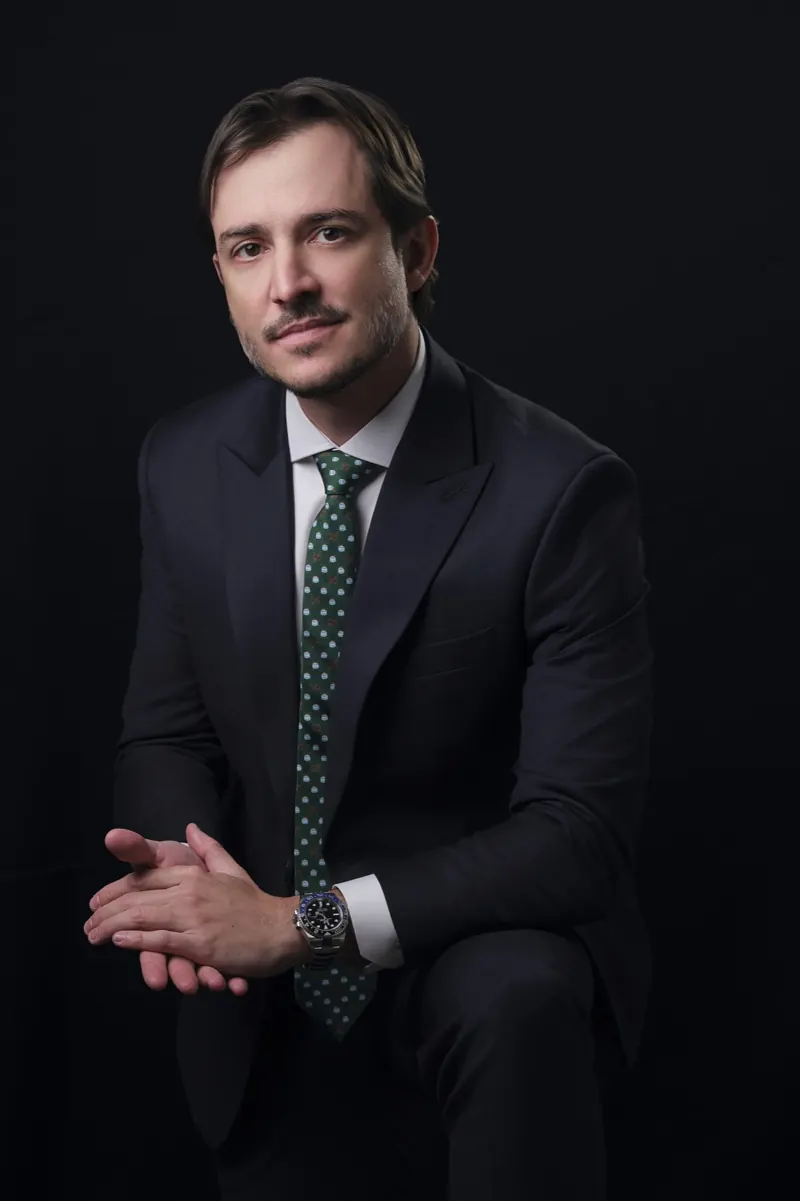
Dr. Sella is an otolaryngologist with a doctorate in morphophysiology of facial structures from HCFMRP-USP and has performed more than 1,500 rhinoplasties, a large share of them in noses with thick or intermediate skin. Thick skin is not a complication. It is a variable that has to be measured and planned for.
What does thick skin actually do to the result?
The skin is the last layer, and it is the layer the eye sees. Cartilage work can be precise and still be invisible if the envelope above it is dense and inelastic.
- It hides definition. Small refinements of the tip disappear under a thick dermis and a well developed subcutaneous layer.
- It holds fluid. Edema in thick skin resolves slowly and unevenly, often lasting months longer than in thin skin.
- It scars inward. The space created by removing cartilage can fill with fibrous tissue, which may blunt the supratip and create a rounded, poorly defined tip over time.
- It resists shrinking. Thick skin does not redrape well over a reduced framework. Lowering a dorsum without supporting the envelope can produce a thicker looking nose than before.
The opposite problem also exists. Very thin skin shows every irregularity and every graft edge. Neither extreme is easier. They simply demand different strategies.
Structure over resection: the planning logic
The classic reduction rhinoplasty of past decades removed cartilage and bone and waited for the skin to shrink. In thick skin, that approach often disappoints.
The modern logic is to build. Projection of the tip is what stretches the envelope from within and creates shadow and light. Support is what keeps that projection over years. In practice this means septal extension grafts, columellar struts, lateral crural work, alar rim support and, when septal cartilage is insufficient or already used in a previous surgery, ear or rib cartilage. Dr. Sella uses a projectometer during surgery to keep measurements objective rather than impressionistic.
Defatting the subcutaneous layer can be part of the plan in selected cases, done conservatively, because the blood supply of the skin and the risk of contour irregularity both deserve respect. Alar base refinement is frequently discussed when the base is wide, always weighing scar quality against the gain in harmony.
| Variable | Thin skin | Thick skin |
|---|---|---|
| Definition appears | Early, sometimes too early | Late, gradually |
| Main risk | Visible grafts and irregularities | Loss of definition, supratip fullness |
| Graft strategy | Fewer, smoother, camouflaged | Stronger projection and support |
| Dorsum handling | Preservation or careful reduction | Preservation often favored, less raw surface |
| Swelling timeline | 6 to 12 months | 12 to 18 months |
| Taping after cast removal | Useful | Usually more important |
Where ultrasound changes the plan
Skin thickness can be estimated by pinching. It can be measured with high-frequency dermatologic ultrasound, and measurement is more useful. In the same clinic in Maringá, Dr. Núbia Goedert Soares Sella, radiologist, performs the dermatologic ultrasound used in preoperative planning.
The exam shows how thick the skin is at the radix, dorsum, supratip and tip, which rarely is uniform. It also identifies previous fillers that the patient may have forgotten or that were never disclosed, including permanent products, scar tissue from earlier surgery, graft position, bone irregularities and the vascular anatomy of the columella. Each of these findings can change technique, graft choice and the safety margin during dissection.
For thick skin specifically, ultrasound helps answer two practical questions. How much projection does this tip need to be seen through this envelope, and how much soft tissue can be safely thinned.
Do preservation and ultrasonic techniques help thick skin?
They often do, for different reasons.
Dorsal preservation keeps the natural dorsal roof and lowers it as a unit, which reduces the raw surface under the skin and tends to produce less dead space where fibrosis can accumulate. Dr. Sella has published on indications and complications of preservation rhinoplasty in international journals, including articles in Facial Plastic Surgery Clinics of North America, and teaches the technique in courses and congresses in more than ten countries.
Ultrasonic rhinoplasty with a piezoelectric instrument cuts bone without cutting soft tissue, which may reduce bruising and allows precise bone shaping under direct vision. In a thick envelope, precision of the bony framework matters because you only get one chance to set the foundation.
Neither technique is universal. Some thick-skinned noses need structural reconstruction with rib cartilage instead. The choice belongs to the surgical plan, not to a marketing label.
Recovery when the skin is thick
The cast stays about seven days, followed by taping for roughly another week. Taping may be extended in thick skin, as it helps the envelope redrape over the new framework. Bruising around the eyes can last up to 15 days. Light bleeding in the first 48 to 72 hours is expected.
Definition arrives in layers. The nose looks swollen for weeks, acceptable at a few months and refined much later. In thick skin and in revision cases, the final result can take 12 to 18 months. Patience is part of the treatment, and so is follow-up, since conservative measures during healing are sometimes indicated and decided case by case.
Thick skin in revision surgery
A nose that lost definition after an earlier reduction is a frequent reason for revision rhinoplasty. The envelope is now scarred, less elastic and often thicker in the supratip. Planning usually requires cartilage from outside the nose and a realistic conversation about what the skin will allow. Revision rates reported in the literature range from 5 to 15 percent, and revision is normally considered only after 12 months.
Coming from abroad
Patients living outside Brazil usually start with a teleconsultation, run preoperative tests in their own city, arrive one or two days before surgery and stay about seven days until the cast is removed. The team speaks Portuguese, English and Spanish, and issues documentation in English or Spanish when requested. Maringá has direct flights from São Paulo and Curitiba. Details are explained on the international patients page.
When to see Dr. Sella
If your nose was operated before and lost definition, if you were told your skin is too thick for rhinoplasty, or if you simply want to understand what your skin will allow, a consultation is the place to find out. It lasts about one hour and includes internal nasal examination, standardized photographs, digital simulation and nasal ultrasound when indicated. Risks, technique and timeline are always individual. You can reach the team through the contact page or read more about the surgeon's background.

Otolaryngologist and facial plastic surgeon · CRM-PR 33.018 · RQE 17.984. PhD from FMRP-USP, founder of the Sella Learning Center. Updated on 2026-10-15.
Frequently asked questions
Can I have a rhinoplasty if my skin is thick?
Yes, thick skin is not a contraindication. It changes the technique, the amount of structural support needed and how long the final result takes to appear, and the indication is defined individually in consultation.
How long does swelling last in thick skin rhinoplasty?
Most visible swelling settles in the first months, but definition continues to improve slowly. In thick skin and in revision cases the final result may take 12 to 18 months.
Why do surgeons add cartilage instead of removing it in thick skin?
Thick skin does not shrink well over a reduced framework. Projection and support stretch the envelope from inside and create the shadows that produce definition, while excessive resection tends to be filled by scar tissue.
What does the nasal ultrasound show before surgery?
It measures skin thickness at different points of the nose and can identify previous fillers, scar tissue, grafts, bone irregularities and the vascular anatomy of the columella, all of which may change the surgical plan.
Is Brazil a good place to operate a thick-skinned nose?
Brazilian surgeons operate thick and intermediate skin routinely because of the country's mixed ancestry and high procedure volume. What matters most is the individual surgeon's training and planning, which you can verify through the CRM specialist registry.
How many days do international patients stay in Maringá?
The usual stay is about seven days, arriving one or two days before surgery and leaving after the cast is removed, with follow-up visits at one, three, six and twelve months in person or online.
Can I have the tip of my nose made smaller if my skin is thick?
Thick skin limits how much fine detail the surface can show, so simply narrowing or trimming cartilage often gives a rounder tip over time. The usual strategy is to refine and project the tip with grafts so the envelope is stretched from the inside and light and shadow appear. Realistic goals for your nose are defined in consultation, after examination and skin measurement.
Does thick skin increase the chance of needing a revision?
The literature reports revision rates of roughly 5 to 15 percent for rhinoplasty in general, and thick skin can make the first year harder to judge because edema and scar tissue take longer to settle. For this reason any revision assessment is only made after at least 12 months, sometimes 18 months in very thick skin. Dr. Sella discusses this timeline openly before surgery.
What is the difference between preservation rhinoplasty and structured rhinoplasty for thick skin?
Preservation techniques lower the dorsum by moving the natural bone and cartilage rather than resecting it, which keeps dorsal lines intact. Structured work uses grafts from septum, ear or rib to support and project the tip. In thick skin the two are often combined, and the choice depends on your anatomy, bone length and skin thickness measured on ultrasound.
Can injections or fillers improve definition in a thick-skinned nose?
Hyaluronic acid can camouflage small contour issues in selected cases, always ultrasound guided, but it does not thin the skin or create tip definition. Permanent fillers such as PMMA or silicone and PDO threads in the nose are not recommended, as they complicate any future surgery. A consultation clarifies whether a non surgical option makes sense for you or whether surgery is the appropriate path.
Book a consultation with Dr. Guilherme Sella
In person in Maringá, Brazil, or by video consultation. English-speaking team.