

Ultrasonic rhinoplasty: bone reshaped with control.
Piezo is a tool, not a technique. Understanding what it does to nasal bone, what it cannot fix, and when it is worth the extra operating time helps you ask better questions before surgery in Maringa.
Ultrasonic rhinoplasty uses a piezoelectric instrument that vibrates at high frequency to cut, thin, and sculpt nasal bone while sparing soft tissue such as mucosa, vessels, and cartilage. In practice it allows more precise osteotomies and smoother dorsal bone contouring than chisels and rasps, usually with less uncontrolled fracture. It does not change skin thickness, cartilage shape, or tip support, and it requires wider exposure, irrigation, and longer operating time. Dr. Guilherme Sella, an ENT surgeon in Maringa, Brazil, uses piezo routinely and teaches it in the Preservation Ultrasonic Rhinoplasty Course.
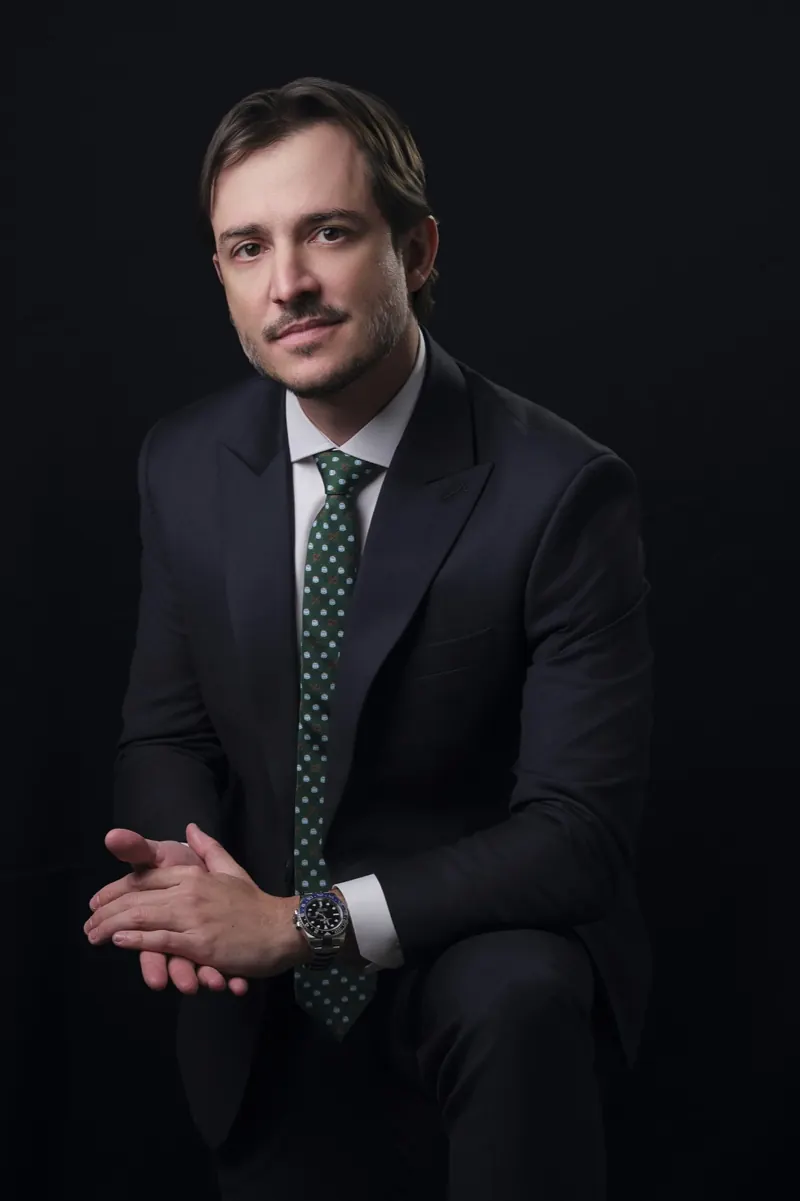
What ultrasonic rhinoplasty actually is
Ultrasonic rhinoplasty is conventional rhinoplasty performed with a different instrument for the bony part of the nose. The piezoelectric device, commonly called piezo, vibrates at a frequency that cuts calcified tissue and tends to spare soft tissue. Mucosa, periosteum, vessels, and cartilage are much less likely to be injured by the active tip than they are by a mallet and chisel.
The handpiece receives different inserts: fine saws for osteotomies, scrapers for dorsal bone, and chisels for denser areas. Saline irrigation cools the bone during the work. The rest of the operation, meaning septum, cartilage grafts, tip, and valves, is done with classic instruments.
This matters for expectations. Piezo is a tool that improves one chapter of the surgery. It is not a brand of result, and it does not replace surgical planning. You can read the technical overview on the ultrasonic rhinoplasty page.
What piezo changes inside the operating room
Three things change in a measurable way for the surgeon.
- Osteotomies become visual and progressive. With chisels, part of the bone cut is blind and finished by a controlled fracture. With piezo under direct vision, the line is cut where it was planned, millimeter by millimeter.
- Dorsal bone can be sculpted, not only rasped. Small irregularities, a residual bony hump, an asymmetric bony vault, or a thick radix can be thinned with a scraper insert instead of being filed with traction on the whole nasal pyramid.
- Soft tissue is better preserved. The mucosa under the bone and the periosteal envelope stay more intact, which reduces uncontrolled bleeding in the bony step.
Many published series suggest less early bruising and faster resolution of swelling with ultrasonic instruments. Those findings are consistent but not universal, and individual recovery still depends on skin, surgical time, and what else was done to the nose.
Ultrasonic versus classic instruments
| Aspect | Piezoelectric (ultrasonic) | Chisels, rasps, and osteotomes |
|---|---|---|
| Bone cutting | Progressive, under direct vision | Partly blind, finished by fracture |
| Soft tissue injury risk | Lower for mucosa and vessels | Higher, especially with force |
| Dorsal bone contouring | Sculpting and thinning possible | Filing, with traction on the vault |
| Exposure needed | Wider degloving and irrigation | Can be done through limited access |
| Operating time | Usually longer | Usually shorter |
| Learning curve | Steep, specific training | Classic, taught in residency |
| Effect on cartilage and tip | None by itself | None by itself |
The table shows the honest trade off. Precision costs exposure and time. In a thin, mildly deviated bony vault, a trained surgeon may reach the same result with classic osteotomes in less time. In asymmetric, very thick, or previously operated bone, ultrasonic work tends to give control that is difficult to reproduce otherwise.
What ultrasonic rhinoplasty does not do
This is the part most online content skips.
- It does not change skin thickness. Thick sebaceous skin still limits definition and still takes longer to settle.
- It does not shape cartilage. Tip projection, rotation, and symmetry depend on sutures, grafts, and preservation of ligaments.
- It does not correct breathing by itself. Septum, turbinates, and nasal valves are treated separately, which is where training in ENT matters.
- It does not eliminate the chance of revision. The literature describes revision rates in the range of 5 to 15 percent, assessed only after 12 months.
- It does not shorten the final result timeline. Definitive result still comes between 6 and 12 months, and up to 18 months in thick skin or secondary cases.
Any page that sells piezo as a guarantee of a swelling free recovery is overselling an instrument.
Ultrasonic work and dorsal preservation together
Ultrasonic instruments became especially useful in preservation rhinoplasty, where the dorsum is lowered as a block through push down or let down maneuvers instead of being cut and rebuilt. In these cases precise bone cuts at the lateral walls and at the radix define how the whole dorsum settles. A fine piezo saw makes those cuts reproducible.
Dr. Sella has published on this field, including chapters on expanding indications for dorsal preservation and on the Brazilian approach to dorsum preservation in Facial Plastic Surgery Clinics of North America. The combination of preservation and ultrasonic instruments is the core of his practice and of his teaching. More on the concept is explained on the preservation rhinoplasty page.
In revision cases the logic is similar. Bone that was already fractured, thinned, or irregular is safer to sculpt than to hammer. Secondary surgery still demands grafts and longer operating time, as described in revision rhinoplasty.
Recovery after ultrasonic rhinoplasty in Maringa
The protocol does not change because of the instrument. Rhinoplasty is performed under general anesthesia, usually takes 3 to 5 hours, and revisions take longer. Patients stay 12 to 24 hours at the hospital in Maringa. An external aquaplast plate stays about 7 days, followed by one week of taping. Most patients do not need nasal packing. Light bleeding for 48 to 72 hours is expected, and periorbital bruising can last up to 15 days.
Sleep with the head elevated 30 degrees for at least 10 days, use ice in the first two weeks, never blow the nose, and irrigate with saline. No glasses for 4 weeks. Exercise after 15 days. Sun, beach, and pool only after one month, with sunscreen SPF 30 for three months.
Why patients consider Brazil for this surgery
Brazil has a long tradition in facial surgery and ranks among the countries with the largest volume of aesthetic procedures according to ISAPS surveys. Medicine is regulated by the Federal Council of Medicine, and the specialist title, the RQE, can be checked on the state medical board website. Costs tend to be lower than in the United States and Europe because of hospital structure, fees, and exchange rate.
That said, choose the surgeon, not the country. Ask for the specialist registration number, ask how many rhinoplasties per month the surgeon performs, ask where the surgery is done, and ask who follows you after you fly home. International patients usually start with a teleconsultation, arrive one or two days before surgery, and stay about seven days until the cast is removed. The full itinerary is described for international patients.
Teaching the technique, not only using it
Dr. Sella runs the Sella Learning Center in Maringa, where the Preservation Ultrasonic Rhinoplasty Course brings 5 to 6 surgeons for 4 to 5 days with live surgeries and fresh cadaver dissection. The Preservation Week has already had six editions. He has been an invited lecturer in more than ten countries, including two lectures at the All in One Rhinoplasty Congress in Istanbul in 2025. Surgeons can see the formats on the courses page.
When to see Dr. Sella
A consultation lasts about one hour and includes internal nasal examination, standardized photographs, digital simulation, and, when indicated, high frequency nasal ultrasound to assess skin thickness, previous grafts, and bone. Only after that evaluation is it possible to say whether ultrasonic instruments, dorsal preservation, or a structural approach fits your anatomy. Indication, risks, and plan are always individual. You can schedule in person in Maringa or by teleconsultation through the contact page, and read more about the surgeon's background on his profile.

Otolaryngologist and facial plastic surgeon · CRM-PR 33.018 · RQE 17.984. PhD from FMRP-USP, founder of the Sella Learning Center. Updated on 2026-10-15.
Frequently asked questions
Is ultrasonic rhinoplasty better than traditional rhinoplasty?
It is more precise for the bony part of the nose, especially in asymmetric, thick, or previously operated bone. It does not change cartilage work, skin thickness, or the final result timeline, so the best technique depends on your anatomy and is defined in consultation.
Does piezo rhinoplasty cause less bruising?
Several published series report less early bruising and faster resolution of swelling because soft tissue is better preserved during bone work. This is a tendency, not a guarantee, and recovery still varies with skin type and the extent of the surgery.
Does ultrasonic rhinoplasty require an open approach?
In most cases piezo requires wider exposure and saline irrigation to work safely on the bone, which usually means an open approach. Some selected cases can still be done through a closed approach.
How long until I can fly home after rhinoplasty in Brazil?
Patients from other cities and countries generally stay about seven days in Maringa until the external cast is removed, and flying is released after that. Follow up visits at 1, 3, 6, and 12 months can be in person or online.
Does the piezo instrument make the surgery longer or more expensive?
Ultrasonic bone work usually adds operating time because the cuts are progressive and done under direct vision. Surgical planning, grafts, and operating time all influence the final budget, which is presented only after the consultation.
Can ultrasonic rhinoplasty also fix my breathing?
The instrument itself does not treat breathing. Septoplasty, turbinoplasty, and nasal valve correction are performed in the same operation when indicated, which is assessed during the internal nasal examination.
Can piezo be combined with preservation rhinoplasty?
Yes. Ultrasonic instruments are often used in dorsal preservation to make precise bone cuts at the radix and lateral walls before the dorsum is lowered as a unit. Dr. Sella uses piezo routinely in both preservation and structural cases in Maringa. Which combination fits your nose is decided after examination and imaging during the consultation.
Is ultrasonic rhinoplasty useful in revision surgery?
It can be helpful when the bony vault is irregular, asymmetric, or has sharp edges left from a previous operation, because the scraper inserts thin bone under direct vision instead of pulling on scarred tissue. Revision cases are still more complex and usually take longer than a first rhinoplasty. The plan depends on what was done before, on the quality of your skin, and on available graft material.
Does piezo rhinoplasty hurt less afterwards?
Most patients describe rhinoplasty discomfort as pressure and nasal obstruction rather than sharp pain, and that is similar with either instrument. Sparing mucosa and periosteum may reduce the sensation of bruising in the first days, but pain control is managed with medication in every case. Recovery varies between people, so expectations are reviewed individually.
Will I still need a cast if the surgery was done with piezo?
Yes. An external aquaplast cast is kept for about seven days, followed by roughly one week of taping, regardless of the instrument used for the bone. The cast protects the bony vault while it stabilizes in its new position. Patients travelling to Maringa usually plan around seven days in the city until the cast is removed.
Book a consultation with Dr. Guilherme Sella
In person in Maringá, Brazil, or by video consultation. English-speaking team.