

Why Brazil for rhinoplasty.
Volume alone says little about a surgeon. This guide explains how Brazilian medicine is regulated, how to verify a specialist title, and why operating costs here are structured differently from the US and Europe.
Brazil combines a long plastic surgery tradition, a formal regulatory system and a large volume of procedures. Surgeons are licensed by the CFM through regional councils, and a specialist title appears as an RQE number that anyone can verify online. Accredited private hospitals operate with anesthesiologists, ICU support and standard surgical protocols. Costs are usually lower than in the US or Europe because of fee structure, hospital pricing and exchange rate, without reducing operating room standards. Brazil also contributed actively to dorsal preservation rhinoplasty, a field in which Dr. Guilherme Sella has published peer reviewed work.
What people really mean by "why Brazil"
Most international patients asking this question want three answers at once. Is the training real. Is the hospital safe. Is the price difference explained by something other than cutting corners. Those are fair questions, and they have objective answers that do not depend on marketing.
Brazil has a long surgical tradition in facial and body plastic surgery, historically associated with the school of Ivo Pitanguy and with large public teaching hospitals that train surgeons on high case volume. According to surveys published by ISAPS, Brazil is consistently among the countries with the highest number of aesthetic procedures performed worldwide. High volume does not make any individual surgeon better. What it does create is a dense ecosystem: experienced anesthesia teams, hospitals used to elective facial surgery, instrument availability, and a local culture of courses, congresses and fellowships.
How Brazil regulates surgeons
Medicine in Brazil is regulated by the Conselho Federal de Medicina, the CFM, through regional councils in each state. Every physician has a CRM number tied to a state. A physician who completed an accredited residency and obtained a board title can register it as an RQE, which stands for registro de qualificação de especialista.
This matters for a foreign patient because the RQE is public. You can search a doctor's name on the regional council website and see the license status and which specialties are formally registered. A surgeon operating noses should have a registered specialty consistent with that practice, such as otolaryngology or plastic surgery.
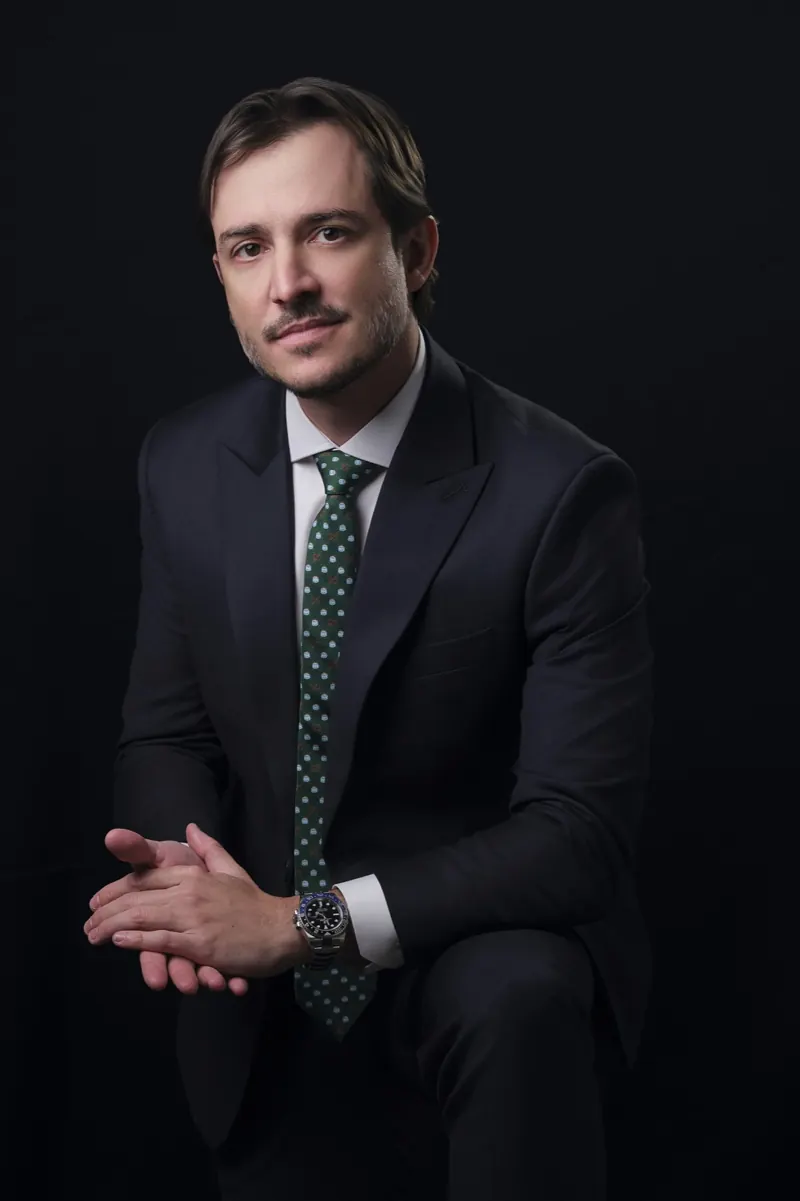
As a practical example, Dr. Guilherme Sella holds CRM-PR 33.018 and RQE 17.984 in Otolaryngology, with residency at the Hospital das Clínicas of the Ribeirão Preto Medical School of USP and a direct doctorate in morphophysiology of facial structures completed at the same institution in 2018. You can read the full academic record on the surgeon's profile page.
What to verify before booking abroad
| What to check | Where it comes from | Why it matters |
|---|---|---|
| Active license and RQE | Regional medical council website | Confirms specialty training is formally registered |
| Residency and fellowship | Surgeon's CV, institution names | Shows where technique was learned, not just claimed |
| Peer reviewed publications | PubMed, ORCID | Indicates participation in the scientific debate |
| Hospital accreditation | Hospital website, on site visit | Anesthesia, ICU access and emergency protocols |
| Who performs the surgery | Written confirmation before travel | Avoids ghost surgery scenarios |
| Follow up plan | Consultation and written schedule | Rhinoplasty needs months of follow up |
A surgeon who answers all six items in writing is giving you more information than any ranking or testimonial could.
Hospital standards and where the surgery happens
Facial surgery in Brazil is performed in private hospitals and in accredited surgical centers, with the same basic requirements you would expect anywhere: a board certified anesthesiologist, continuous monitoring, recovery room, and access to intensive care if needed.
Rhinoplasty with the team in Maringá is performed under general anesthesia, or sedation in selected cases, and typically takes three to five hours, longer in revision cases. Patients stay twelve to twenty four hours at the Saine Health Complex, a boutique hospital of 7,500 square meters with eleven operating rooms, adult and neonatal ICU, and intensivists on site around the clock. Smaller procedures performed under local anesthesia, such as upper eyelid surgery or otoplasty, may be done in the clinic's own procedure room.
The principle is simple. The complexity of the case defines the setting, never the other way around.
Why costs are structured differently
Surgery in Brazil generally costs less than in the United States or Western Europe. The reason is structural and has nothing to do with quality of materials or anesthesia.
- Fee structure. Surgeon and team fees follow the local economy and local cost of living.
- Hospital pricing. Operating room time, nursing and hospital stay are priced in the Brazilian market.
- Exchange rate. Patients earning in dollars, euros or pounds convert into a currency with greater purchasing power locally.
- Malpractice and administrative overhead. Insurance and billing structures differ substantially from the American model.
None of these factors require reducing standards. What they do mean is that a price difference, by itself, is not evidence of a bargain or of a risk. The relevant questions remain the surgeon, the indication and the hospital.
Practice at the clinic in Maringá is private, without insurance contracts. The team issues documentation so patients can request reimbursement from their own insurer when applicable, including for the functional part of the surgery such as septoplasty or turbinate reduction. A surgical estimate is only given after the consultation, since it depends on technique, operating time and grafts.
The Brazilian school of dorsal preservation
One specific reason surgeons and patients look at Brazil today is dorsal preservation. Instead of removing the nasal hump and rebuilding the roof of the nose, preservation techniques lower the existing dorsum through maneuvers such as push down and let down, keeping the natural dorsal lines intact.
Brazilian surgeons contributed to expanding and systematizing the indications for these techniques, and that contribution is documented in the international literature. Dr. Sella is a co-author of three peer reviewed papers on the subject: "Indications for Preservation Rhinoplasty: Avoiding Complications" (Facial Plastic Surgery, 2021), "Brazilian Approach to Dorsum Preservation" (Facial Plastic Surgery Clinics of North America, 2023) and "Expanding Indications to Dorsal Preservation Rhinoplasty" (Facial Plastic Surgery Clinics of North America, 2025).
This is also a teaching practice. The Sella Learning Center runs a twelve month fellowship, weekly mentorship and the Preservation Week course, already in its sixth edition, and the surgeon has lectured as an invited faculty in more than ten countries. You can read more about the technique on the preservation rhinoplasty page and about piezo instruments on the ultrasonic rhinoplasty page.
Function and form in the same operation
Another point that often decides where to operate is who handles breathing. The nose is an airway before it is an aesthetic unit. An otolaryngologist trained in facial surgery evaluates septal deviation, turbinates and nasal valves in the same consultation as the aesthetic plan, and treats them in the same procedure when indicated.
The consultation lasts about an hour and includes internal nasal examination, standardized photographs, digital simulation and an explanation of the technique. High frequency dermatologic ultrasound is used when needed to assess skin thickness, previous fillers, grafts or fractures. Digital simulation is a communication tool and typically reaches sixty to seventy percent similarity with the final result. Definitive results take six to twelve months, and up to eighteen months in thick skin or revision cases.
Traveling for surgery, in practice
International patients and Brazilians living abroad are seen regularly, with the team working in Portuguese, English and Spanish. The usual path is an initial teleconsultation, preoperative tests done in your home city, arrival one or two days before surgery, and roughly seven days in Maringá until the external cast is removed. Flying is released after cast removal. Follow up visits at one, three, six and twelve months can be in person or online.
Maringá is served by MGF airport with direct flights from São Paulo and Curitiba. The team can suggest accommodation nearby, and a companion is recommended during the first week. Full details are on the international patients page.
When to see Dr. Sella
Consider booking a consultation if you are weighing a primary or revision rhinoplasty, if you have both breathing complaints and aesthetic concerns, or if you want a second opinion on a plan proposed elsewhere. Indication, technique, risks and timeline are individual and defined only after an in person or remote evaluation. To ask about dates and documentation, reach the team through the contact page.

Otolaryngologist and facial plastic surgeon · CRM-PR 33.018 · RQE 17.984. PhD from FMRP-USP, founder of the Sella Learning Center. Updated on 2026-10-15.
Frequently asked questions
Is rhinoplasty in Brazil safe for a foreign patient?
Surgery in accredited Brazilian hospitals follows the same core safety standards used internationally, with a board certified anesthesiologist, monitoring and ICU access when needed. Safety depends far more on the surgeon, the indication and the facility than on the country itself.
How do I verify a Brazilian surgeon's credentials from abroad?
Search the physician's name or CRM number on the regional medical council website, which shows license status and registered specialties as RQE numbers. You can also check publications on PubMed and ORCID.
Why is rhinoplasty less expensive in Brazil?
The difference comes from local fee structure, hospital pricing, administrative and insurance overhead, and the exchange rate for patients earning in stronger currencies. Estimates are only provided after a consultation, since they depend on technique, operating time and grafts.
How long do I need to stay in Brazil after rhinoplasty?
Most patients arrive one or two days before surgery and stay about seven days, until the external cast is removed. Flying is generally released after that, with follow up at one, three, six and twelve months in person or online.
Can breathing problems be corrected in the same surgery?
Yes, when indicated. Septoplasty, turbinate reduction and nasal valve correction can be performed in the same procedure as the aesthetic rhinoplasty, and the clinic issues documentation for insurance reimbursement requests.
What is dorsal preservation and why is Brazil associated with it?
Dorsal preservation lowers the nose while keeping the natural dorsal roof instead of removing and rebuilding it. Brazilian surgeons helped expand and publish the indications for these techniques in international journals.
Do I need to travel to Brazil before surgery for a consultation?
No. International patients usually start with a teleconsultation, where Dr. Sella reviews your history, photographs and goals and explains which techniques may apply. Pre-operative tests can be done in your home city and reviewed before travel. The in-person examination, including the internal nasal exam, is completed in Maringá one to two days before the procedure.
How do I get to Maringá from abroad?
Most international patients fly into São Paulo, at Guarulhos or Congonhas, and then take a short domestic flight to Maringá airport, code MGF. There are also direct connections from Curitiba, and road access from the interior of São Paulo, Mato Grosso do Sul and Paraguay. The clinic team can suggest accommodation close to the office and the hospital.
Will language be a problem during the consultation and recovery?
Dr. Sella speaks Portuguese, English and Spanish, and the team assists patients in those three languages. Post-operative instructions and documentation can be issued in English or Spanish when requested. Questions during recovery are answered through the team's WhatsApp channel.
Can I use my health insurance from my country for surgery in Brazil?
Care at the clinic is private and no insurance plans are accepted directly. The team provides the documentation needed for a reimbursement request, including the functional part of the surgery such as septum, turbinates or sinus work when performed. Whether your insurer accepts that claim depends on your own policy.
Book a consultation with Dr. Guilherme Sella
In person in Maringá, Brazil, or by video consultation. English-speaking team.